Sparks of 2026 #22: Emma Fletcher A Lightning Rod for the Future of Retrofit
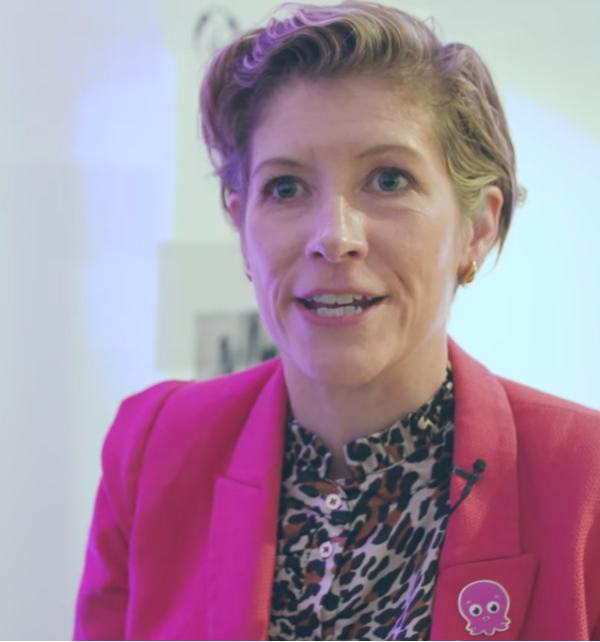
Retrofit does not move forward because of announcements. It moves forward because certain people keep showing up, keep speaking plainly, and keep making the case for doing things better even when it would be easier not to. Emma Fletcher is one of those people.
Over the last twelve months, we have seen her repeatedly at conferences, panels and industry events where the conversation is often dense, technical and crowded with articulate speakers. And yet, time and again, Emma manages to cut through without raising her voice, without grandstanding, and without trying to dominate the room. She speaks simply, honestly and with authority. That combination is rarer than the sector sometimes realises.
Emma is not trying to be provocative. She is not trying to be clever. She is trying to be useful. In a retrofit sector that is finally starting to understand the importance of outcomes, credibility and trust, you can trust her.
As part of Octopus Energy, Emma operates inside one of the most influential organisations in the UK energy landscape. Octopus has already reshaped how consumers think about energy companies, pricing and customer experience. But what makes Emma stand out is how she uses that platform. She does not hide behind corporate language or marketing polish. She uses her voice to advocate consistently for best practice in retrofit, for smarter use of our homes, and for better alignment between energy, housing and land use.
Not advocacy for advocacy’s sake. It is grounded, practical and deeply informed. Emma understands that retrofit does not succeed through slogans. It succeeds when people understand what good looks like and are supported to deliver it.
What we have witnessed, repeatedly, is Emma standing in front of highly technical audiences and choosing clarity rather than verbose complexity. She does not pretend there is a single solution to retrofit. She does not over-simplify difficult trade-offs. But she does insist on first principles: homes should work for the people who live in them; interventions should be appropriate, not just compliant; and progress should be measured by outcomes, not targets.
There is also something important about how Emma occupies space in this sector. She does not perform authority. She embodies it. In rooms where confidence (or grey hair) is often mistaken for competence, Emma’s authority comes from preparation, experience and a clear sense of purpose.
Yes, she wears fantastic socks. Yes, they are often Octopus-branded, along with other pinky stuff. But that visual consistency is not accidental. Just on message. This is a lined up person. Aligned. Emma is comfortable being visibly associated with an organisation that has taken bold positions on energy and consumer fairness. She carries that identity into retrofit spaces where corporate voices are often treated with suspicion, and she does so without defensiveness.
I reckon she would have been a punk in another era.
Corporate advocacy in retrofit is a delicate thing. Too often it slips into sales. Too often it arrives with pre-packaged answers. She listens. She engages. She gives people time, she is generous with it. When she speaks to us, she is open, thoughtful and grounded. There is no sense of hierarchy, no sense of being rushed, no sense that this is a transactional relationship.
That generosity warms your heart - because retrofit is still, at its core, a trust-based endeavour. Homeowners must trust installers. Local authorities must trust delivery partners. Policymakers must trust evidence. And the sector must trust the people who speak on its behalf.
Emma Fletcher is trusted. Because she shows up consistently.
In the corporate retrofit space, that makes her unusual. And in 2026, it makes her essential.
We have written elsewhere about the growing importance of evidence, outcomes and monitoring. We have argued that retrofit is entering a more mature phase, where claims will increasingly need to be backed by proof and lived impact. People like Emma are crucial to that transition. They help translate ambition into practice, and practice into credibility.
This is why Emma Fletcher is a Spark of 2026.
Other people could do this work. But because she exemplifies the kind of corporate voice retrofit needs - informed, principled, patient and human (with a hint of FU - it's happening anyway).
As retrofit continues to move from aspiration to accountability, voices like hers will matter more than ever.
We are grateful for the time she gives us. We value the clarity she brings to the conversation. And we are watching closely, because people like Emma Fletcher are not just talking about the future of retrofit. They are helping to shape it. You can have the legwork and experience to talk, but this one, she walks the talk.