
You Cannot Maintain Good Health Without Good Housing. Choose CHIA
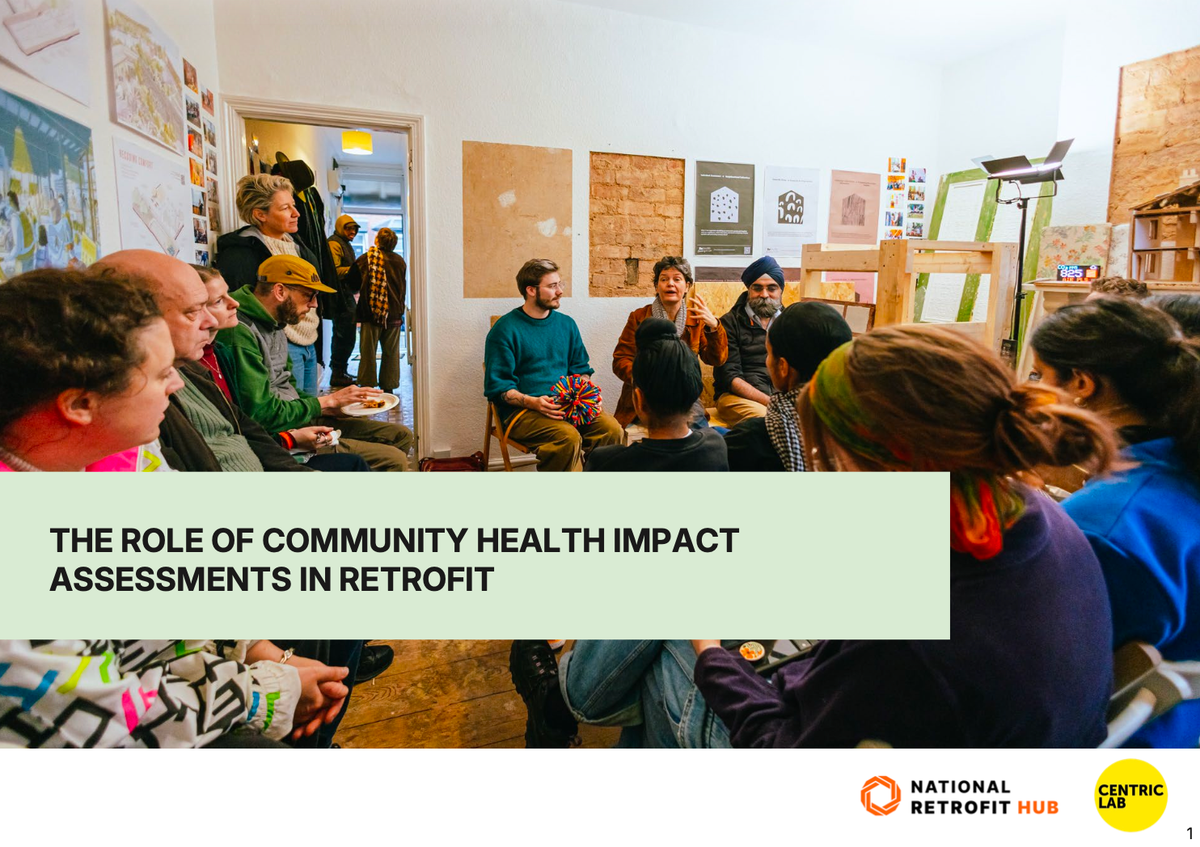
You might recognise the title of this article from the eponymous report by East Sussex council, which linked poor health out comes to poor housing. The relationship is oft cited but a further nuanced, but critical question is being missed. What data informs the process, and could we do better?
This is one of the focal points of this brilliant report published by the National Retrofit Hub in partnership with CentricLabs.
It's interesting to read through the research that helped compile the report and take a moment to reflect on the issues it raises.
More importantly, the toolkit the report connects you to is a must have guide to making decisions that devolve decision making out of central government, and back into places, where the biggest impact can occur.
Marginalised Voices - Missed Opportunities
In a world where increasing loneliness, social isolation and digitised relationships define our interactions, the report identifies that one of the tools used to increase understanding of a communities needs, the Health Impact Assessment could be flipped on it's head - not just to improve retrofit - but by identifying shared challenges, drive social cohesion and a sense of agency.
For clarity, the report handily repeats the World Health Organisation definition of a HIA;
“an approach used to systematically judge the potential health effects of a policy, strategy, plan, programme or project on a population, particularly on vulnerable or disadvantaged groups. HIAs can help to identify the distribution of those effects within the population, generate evidence for proper action to avoid and mitigate sometimes unintended health risks, and promote health opportunities.”
The flipping occurs when the HIA is driven by the community is seeks to serve. In simple terms - use local communities lived experience not just as evidence for reporting, but to redefine what reporting what data should be collected - to most effectively change their environment to suit their needs.
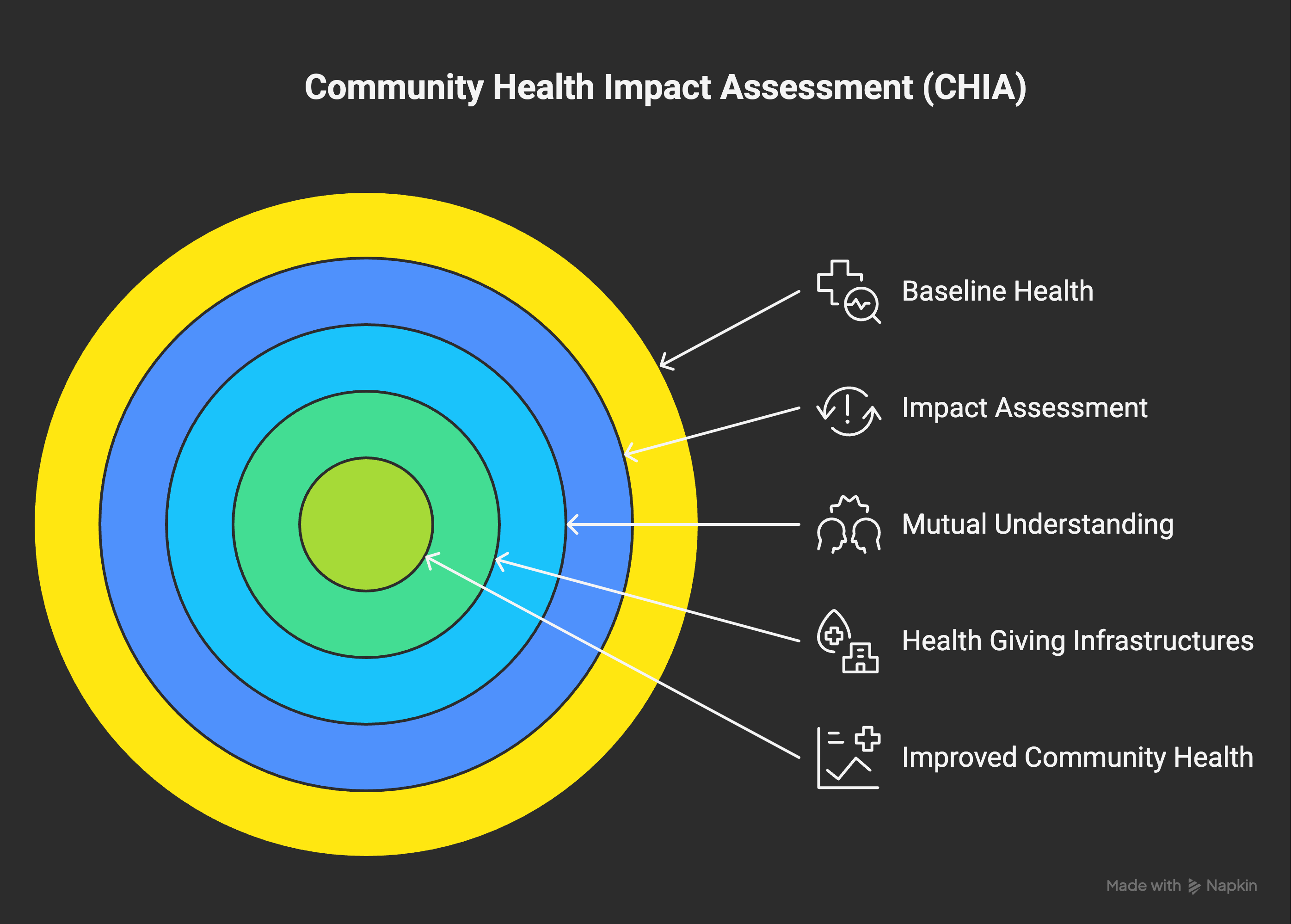
The term coined for this is a Community Health Impact Assessments (CHIA). It builds on one of the most basic tenets of place based retrofit, allowing residents, who know which walls get baked in the summer by excessive heat, can point you to where the local choke point is for flood water - to define this knowledge as the basis for assessing their needs.
Residents define the impact assessment to meet their needs, their lives and their experience.
The CHIA is a tool to baseline your community’s health.
Who Should Read This
This report is not aimed at a single audience. It is a toolkit for anyone trying to make retrofit work in the real world.
First, community groups and residents who already know something isn’t working in their homes or neighbourhoods. A Community Health Impact Assessment gives them a structured way to turn lived experience into evidence. Instead of anecdote, they gain data about how housing, stress, energy costs, mould, noise or heat actually affect their health.
Second, retrofit practitioners and local delivery teams who want their programmes to succeed. A CHIA provides something the sector often lacks: granular, place-based insight into how people actually live in their homes and neighbourhoods. That intelligence can shape retrofit strategies that deliver real outcomes rather than box-ticking compliance.
Third, local authorities, public health teams and policy makers who need better evidence to design and evaluate schemes. A CHIA creates a baseline of community health and makes it possible to understand whether retrofit interventions are actually improving wellbeing, reducing stressors and strengthening communities.
In short, the toolkit helps connect three worlds that rarely speak properly to each other: residents, retrofit professionals and public health.
And that may be the most important takeaway from this report.
If retrofit is going to succeed at scale, it cannot just be about insulation, heat pumps and EPC ratings. It must also be about people, place and health.
The Community Health Impact Assessment toolkit offers a practical way to start that conversation.
If you work in retrofit, housing, public health or community organising, it is well worth reading the full report and exploring the tools available here:
👉 [Download the CHIA workbook and toolkits]
Because the real question the report leaves us with is simple:
If communities understand their own health better than anyone else - why aren’t they helping design the retrofit programmes meant to improve it?