
What Happens When You Put Eight Heat Pumps On One Street And Watch?

For years, Britain's heat pump debate has been driven by stories.
An installer completes a successful project and declares microbore pipework isn't a problem. Another encounters difficulties and reaches the opposite conclusion. One homeowner champions a hybrid system as the perfect compromise. Another argues electrification should be all or nothing. Conversations about radiator sizing, flow temperatures and installation standards fill conference halls, training centres and social media feeds.
Everyone seems to have an opinion.
What has often been missing is evidence gathered under controlled, real-world conditions.
That is why a new project launched at the Net Zero Research Village (NeRV) near Gateshead deserves attention.

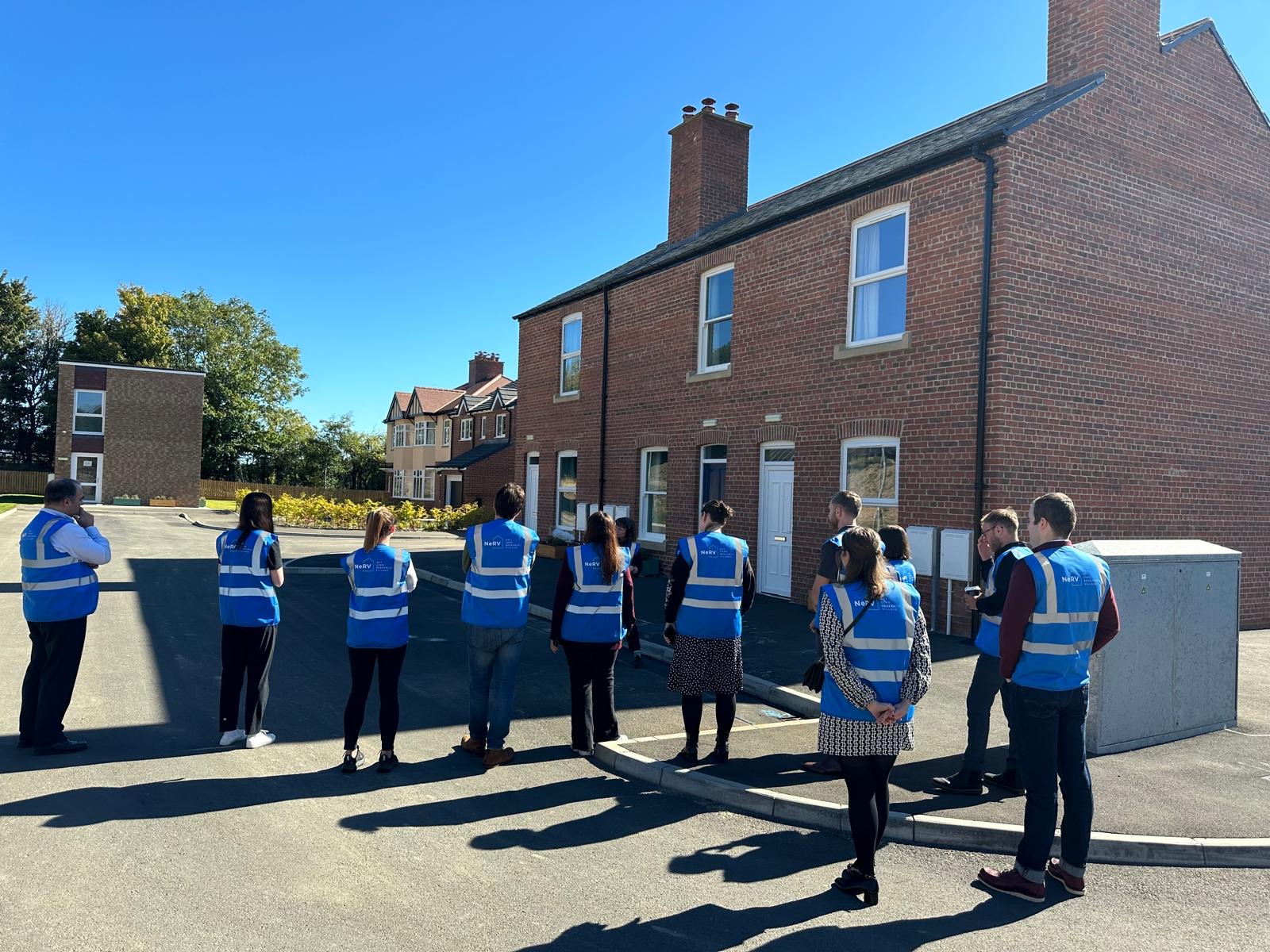
Known as FC Heat, the programme is installing and monitoring eight heat pumps across a street of carefully designed research homes. The properties are not laboratory mock-ups. They are intended to represent the housing stock millions of people actually live in, from Edwardian terraces and inter-war semis to post-war bungalows, flats and more modern detached homes.
The objective is not to determine whether heat pumps work. That question was settled long ago.
Instead, the project is asking a more useful set of questions. What happens when heat pumps encounter the realities of Britain's existing homes? How much does pipework matter? How important is radiator sizing? Are hybrid systems a useful tool or an unnecessary complication? What installation practices produce the best results?
"The FC Heat project will build on evidence from previous UK heat pump trials to enhance understanding of current installation practices, barriers to adoption and lessons learned."
David Lynch, Decarbonisation Programme Manager, NeRV
These are the questions that homeowners, installers and policymakers wrestle with every day.
The answers matter because Britain is entering a new phase of heat pump deployment. Early adopters have already taken the leap. The next challenge is reaching ordinary households who want reassurance that the technology will work in homes like theirs.
That is where Futures Close, the research street at the heart of NeRV, comes into its own.
Across the site, heat pumps from Daikin, Mitsubishi Electric, Vaillant and Worcester Bosch have been installed in a range of different configurations. Some are traditional air source heat pumps. Others are air-to-air systems. Hybrid technologies are also being assessed. Every installation is monitored by sensors collecting performance data in real time.
One of the most closely watched elements of the project will focus on microbore pipework.
"Around 5 million UK homes run heating systems that use microbore pipework."
David Lynch, NeRV
Within retrofit circles, few subjects generate more debate. Some installers view microbore as a manageable design challenge. Others regard it as a significant barrier to heat pump adoption.
Until now, much of the discussion has relied on individual experiences.
The FC Heat project offers an opportunity to move beyond anecdotes and understand exactly how microbore pipework affects efficiency, performance and installation complexity. For homeowners considering a heat pump retrofit, that knowledge could prove invaluable.
The project will also examine another issue that sits at the heart of many retrofit conversations: radiator sizing.
Heat pumps operate differently from traditional boilers. The relationship between heat emitters, system temperatures and overall efficiency is critical. By comparing systems with correctly sized radiators against those that are not optimised, researchers hope to better understand how much of heat pump performance depends on the quality of system design rather than the technology itself.
That distinction is vitally important.
When a heating system fails to meet expectations, it is often the heat pump that receives the blame. Yet many experienced practitioners argue that poor design and commissioning are responsible for a significant proportion of performance issues. Evidence from projects like this could help bring greater clarity to that discussion.
The role of hybrid systems will also come under scrutiny.
Few technologies generate such divided opinions. Advocates see hybrids as a practical bridge between today's heating systems and a lower-carbon future. Critics worry they risk slowing progress towards full electrification. By studying their operation in a controlled but realistic environment, researchers hope to build a clearer picture of where hybrids may have a role and where they may not.
The work will be independently assessed by the Leeds Sustainability Institute at Leeds Beckett University, whose researchers have spent decades studying building performance, retrofit and occupant behaviour. Their findings will ultimately feed into a final report intended to inform manufacturers, installers, policymakers and consumers alike.
Perhaps the most interesting aspect of the project is not the technology itself.
It is the recognition that trust remains one of the greatest barriers to low-carbon heating adoption.
People rarely invest thousands of pounds based on policy announcements. They invest when they understand the risks, the rewards and the likely outcomes. They invest when evidence replaces uncertainty.
"This project will provide the public with an evidence-based, independent assessment of heat pump performance under a wide range of conditions, so that people are better informed when deciding if a heat pump is right for them."
Adam Hardy, Senior Research Fellow, Leeds Sustainability Institute
That is why projects like FC Heat need more exposure.
We know heat pumps work, but now we need to explain why some installations excel, why others struggle and how future projects can be improved.
For the next fourteen months, a quiet street near Gateshead will be collecting answers to questions that have shaped Britain's heating debate for years.
The results may prove valuable far beyond the boundaries of Futures Close.
They may help determine how millions of homes are heated in the decades ahead.