
Heat Pumps Don't Have A Technology Problem. They Have A Disruption Problem.
There will be a couple of companies that really should try to understand how Adia Thermal is coming to eat their lunch.
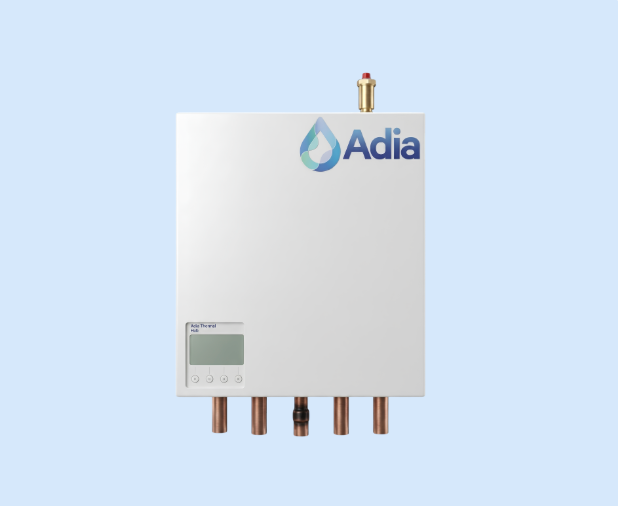
There will be a couple of companies that really should try to understand how Adia Thermal is coming to eat their lunch.
For those of you that haven't heard of this device, here's the quick summary.
The device fits inside a heating system, performing heating control, buffering, TRV management, heat pump management, system balancing and commissioning.
It intelligently learns the properties of a building and adapts heat pump operation and heat distribution accordingly. User preferences and occupancy patterns can then be layered on top to further improve comfort.
Why Will This System Have An Impact?
Disruption Disappears
Always a bold claim.
When someone tells you they have a system that removes the disruption from building works, most people, rightly, grab a huge pinch of salt.
However, in this instance there is evidence from the Adia Thermal performance in buildings with microbore pipework, undersized radiators and systems that don't appear to have the larger heat pump cylinder coils normally associated with heat pump installations, that it may, in fact, reduce the need for some of the expensive extras currently recommended for a heat pump install.
 Adia Thermal
Imagine not having to remove a cylinder because the system can work with your existing cylinder, including older cylinders with smaller coils.
Imagine not having to replace your existing radiators with new emitters because the system, running in an open loop, is coordinated to deliver the correct heat output required to match heat loss.
Imagine homeowners discovering you can deliver a system that has individual TRV controls, intelligent ones, that make rooms the temperatures that the inhabitants want - not what the system demands.
And very importantly for installers, consider what an extra bit of time might mean to you if a system significantly reduces the time required for commissioning.
Who Adia Thermal Will Impress
The potential audience that will benefit from the Adia Thermal system is wide and varied.
As long as expectations are managed, this system has demonstrated, and delivers, performance that means:
- LAs and large organisations commissioning heat pump installs can specify this system with the potential for lower installation costs and less ancillary equipment needing to be procured. Less rads. Less cylinders. Less expense. Better-performing heat pumps.
- Installers can expect to speed up install times, reducing the cost of installs to consumers and making heat pumps even more attractive.
- Consumers, used to TRV control, can be smoothed into the energy transition more easily - with a system more like what they have with gas boiler radiator controls.
Who Adia Thermal Will Not Impress
This is a large list.
Perhaps because with every step of improvement in heat pump adoption, there are inventions, processes and products which you just won't need so much of if Adia Thermal starts being adopted more widely.
Controls are really useful if they fulfil the need of a customer.
Controls currently on the market target the integration of heat pump management, solar battery management and power use in a home.
The interesting difference about the Adia system, and why it threatens not just a few products, is that it has multiple benefits.
It is a thinking, learning, in-your-system product that doesn't just tack on to the controls of devices. It is actively managing, both hydraulically and electronically, your whole home.
For that reason, it will be a thorn in the side of any sales process built around upselling emitter upgrades.
It will challenge the argument about commissioning times.

And it may very well dramatically reduce the problems associated with poor-quality commissioning in one single session of opening the valves and switching Adia on.
What Happens Next?
It's a myth that we can't create unicorn businesses in the UK.
Or that the OEM stack just absorbs good inventions and steals the CAPEX we could be earning for UK companies.
Adia Thermal has been endorsed by some of the most learned, respected and business-savvy experts in the industry.
It could become a massive export overseas.
It could become a challenger to controls companies.
And I expect it will become a very British success story.
Quite simply because it took one problem, tried to fix it, and then did.