
The 140 hour problem. Not now.
There's a problem with coordination. We've been told about it, and witnessed it. Any solutions?

At one end of the country - Kent - we interviewed Simon Baseden at AAC earlier this year, he confessed to a discovery which shocked us.
His business had lost 140 hours to delays with equipment. That's contractors, coordinating with suppliers - then left standing with often simple pieces of kit that weren't reaching him and his customers on time. He fixed it, but it was painful.
Then when we took ourselves up to Scotland, similar problems were hampering Sean Hogan, one of the premier retrofit suppliers up there - with heat pumps being his great headache. Literally no kit. He fixed it, but it wasn't easy.
We found someone who could help - Rosie Cottell and her team, but first - let's agree on what's not working?
A Universal Problem
When the vans are busy, and the order books are filling up, what could be more frustrating and costly to a company than kit and people, not being in the right place at the right time?
And how does that feedback to customers? Doesn't make you look great does it.
If suppliers can't supply then there's a real coordination problem.
The delays and costly overruns on projects all have to be absorbed too. Why does this problem exist, it's down to a couple of structural obstacles. Let's look at them.
Solar, heat pump, most retrofit is a complex process involving multiple funding bodies, compliance layers and installers - which makes it a 'responsibility' issue.
When you look at a normal 'day in the life' of a retrofit company - the truth is - no one day is the same.
There are spreadsheets, diaries and order books everywhere, AI supposed to be helping and often just one very sore headed ops manager or MD looking at how to get it all done.
“You've got lots of subcontractors and lots of people working too hard to hold too much in their heads and still doing too much admin because there's stages of it that aren't automated.” Rosie Cottell - TeamPoint
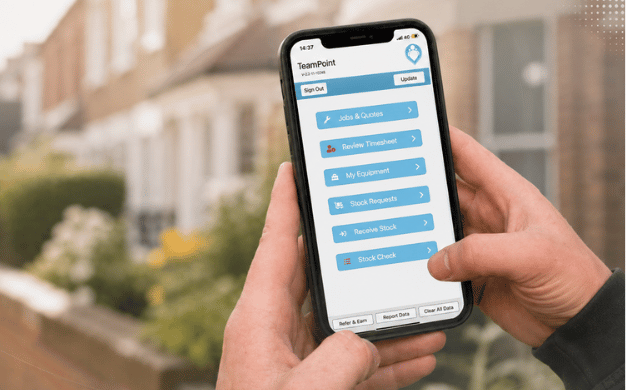
Systemising Processes
AI can only do so much, and as some companies are finding out to their cost, it's not got a support network you can ring up when the damn thing starts 'hallucinating' information. That's why process-based operations are still being managed with human input, and the myth of AI invincibility is being sorely tested.
“Any job management platform that tells you it's going to be next day and it's all easy, it's just not telling the truth. You need your whole team to be on board and you need to learn it.” Rosie Cottell - TeamPoint
Perhaps most importantly for the demands of MCS compliance and any scheme which has staged reporting on progress, businesses have to handle PDFs, documentation and media - which is unwieldy, and data hungry.
After installation, monitoring of performance and safety checks and maintenance are becoming a core revenue stream for any mid-sized business. Keeping track of these key pieces of information just isn't going to cut it on an Excel sheet.
Team Point - Field Based Job Management Software
We hit upon this solution by complete fluke. Rosie Cottell, TeamPoint's marketing and operations lead - was actually following the magazine as she was researching historic improvements to her own home - and over LinkedIn we directed her to our resources, then being nosy, found out about her software company.
It was a light bulb moment.
There are already tools out there like Spruce which assist heat pump installers but Rosie and her team were attacking this problem from a different approach route.
They already have a proven track record in supporting sectors like facilities management and utilities companies, as well as drainage and commercial cleaning operations.
Now they are branching out into retrofit and solar companies. And they really do have a great approach. Because they support companies - in a different way.
The software tackles the headaches of diary management. It beasts its way through coordinating kit and people. Job management is already a key solution offered by Simpro and Joblogic but the key question we asked Rosie, which she happily answered was this.
"How do you tailor software which fixes everything, when companies are unique?"
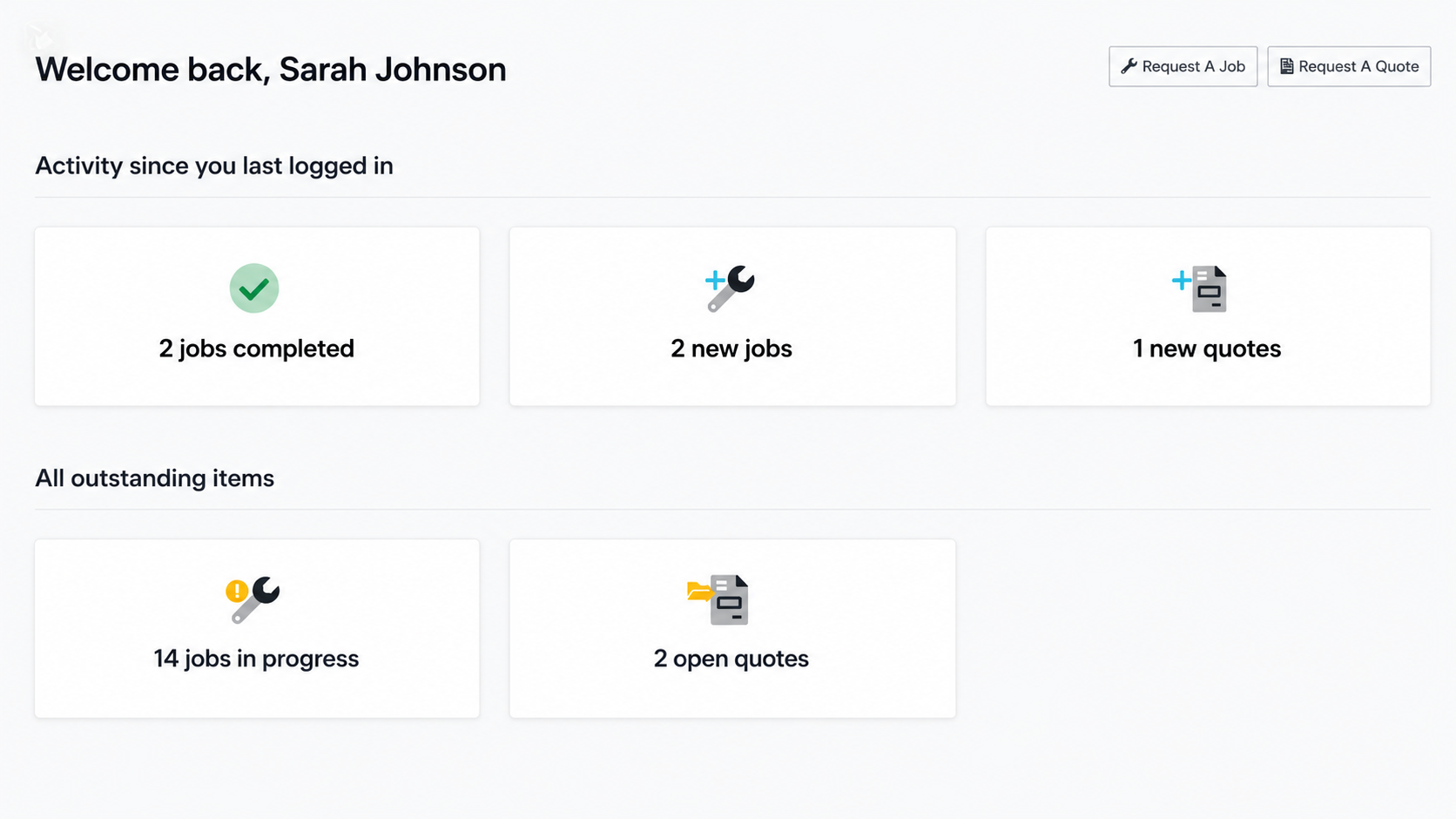
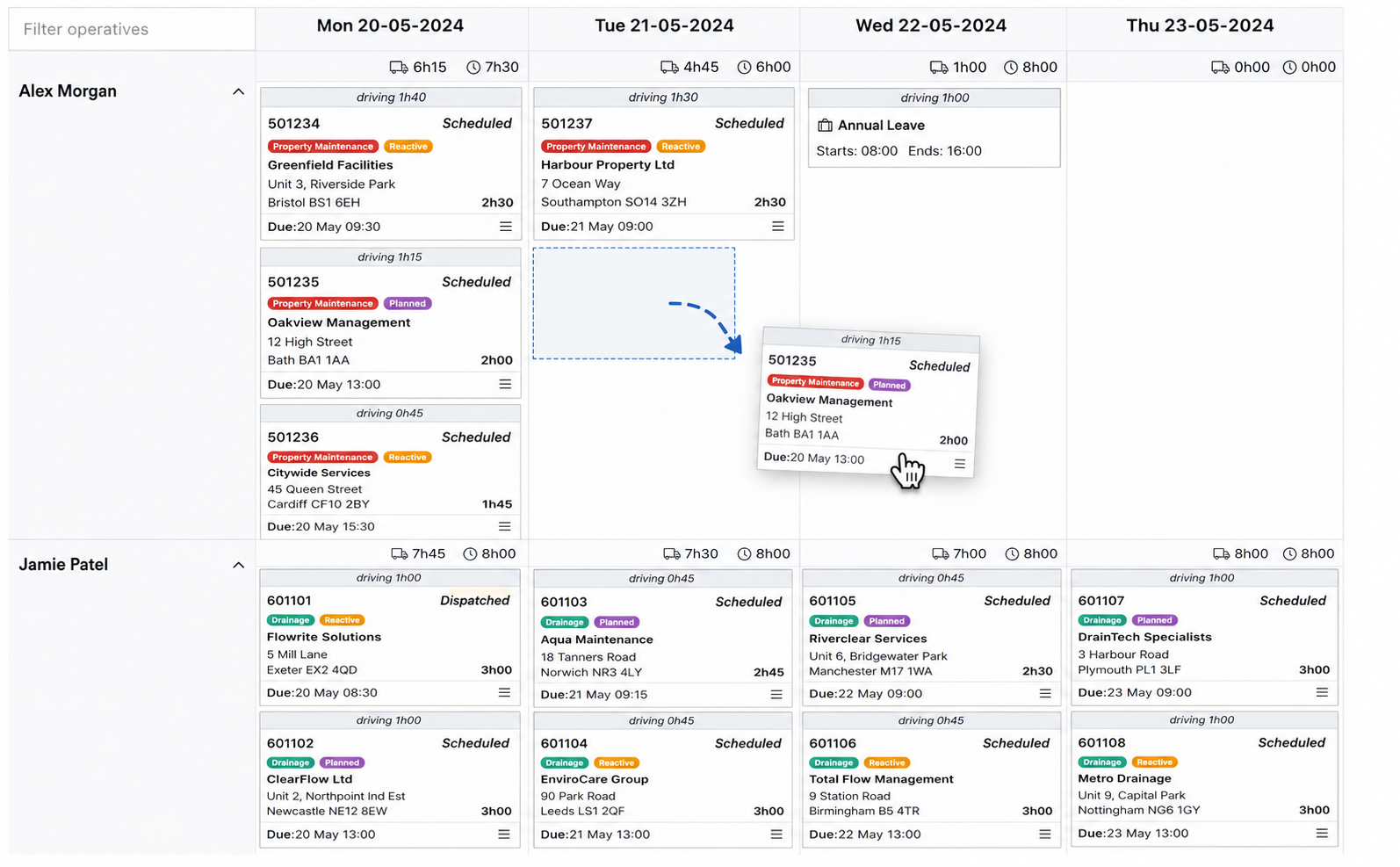
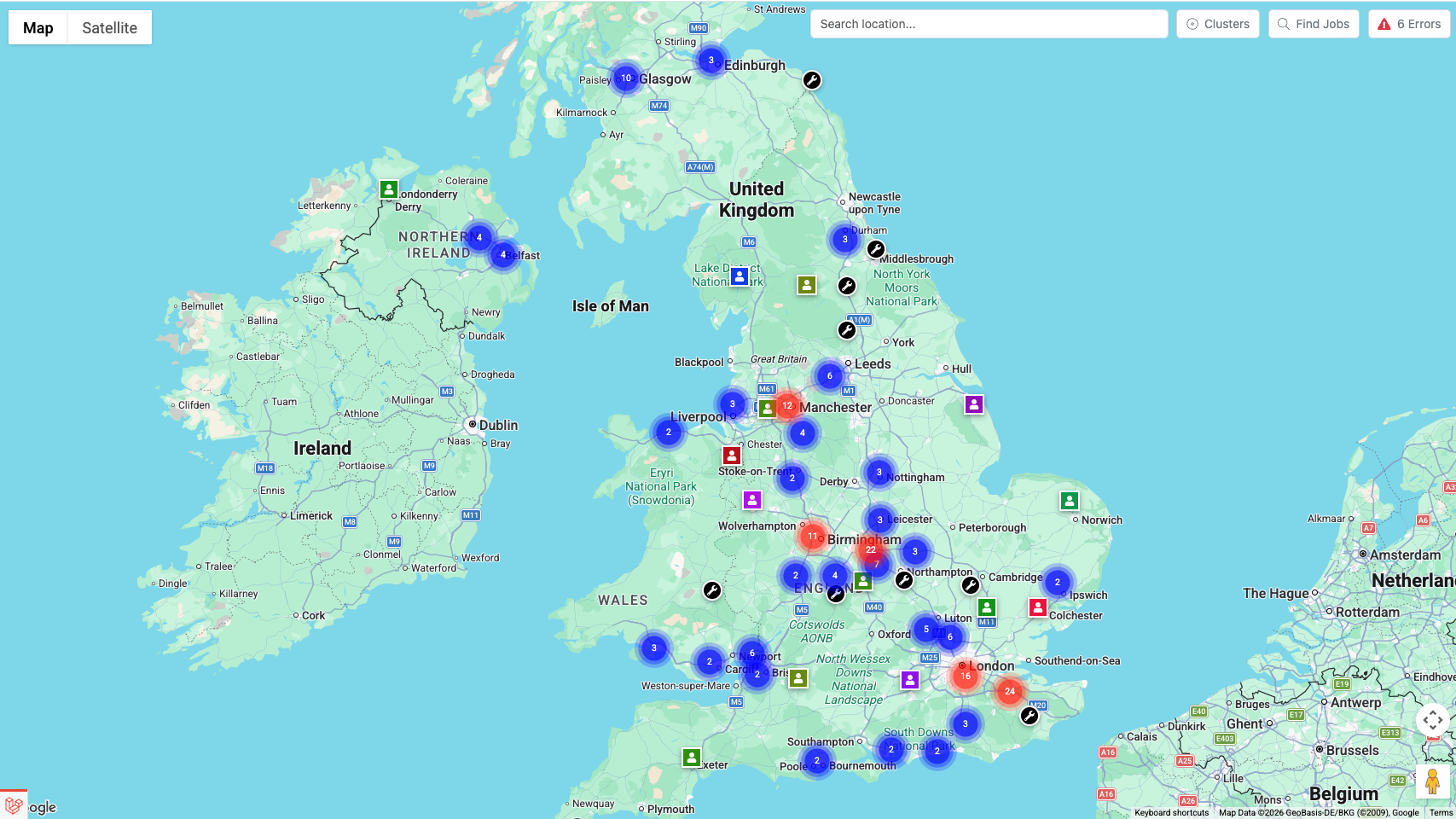
TeamPoint has a streamlined User Interface - It's easy to understand with pictures!
This is perhaps the point where TeamPoint changes the game. As a UK-based, dedicated software solution - they manage each company's needs individually.
Their pricing is incredibly competitive, on average 20% cheaper than the competitors - and the service levels they aim to meet, no call unanswered in 24 hours, means companies feel loved and nurtured.
Maybe the impersonal approach of other AI, agent-based solutions, or larger companies that onboard en masse is why this small but agile company is breaking through in our sector.
Its ability to make you audit-ready without the headache of demanding a huge research request, has to be very appealing to organisations where the yearly or quarterly audits are an admin wedge between running operations and keeping compliant;
“You're audit-ready because you've got the data, haven't you? You can ask Team Point any number of questions.”
For retrofit companies specialising in products which have regular maintenance requirements, the value becomes even clearer. The installation isn't the end of the relationship - it's the beginning of years of servicing, monitoring, compliance and customer contact.
That means knowing what was installed, where it was installed, who installed it, when it needs attention and what happened the last time someone visited. Multiply that across hundreds or thousands of properties and suddenly the humble spreadsheet starts looking rather vulnerable.
And perhaps that's the wider lesson.
Simon Baseden didn't lose 140 hours because his team didn't know how to install equipment. Sean Hogan wasn't struggling because he didn't understand heat pumps. These were good businesses being tripped up by the increasingly complicated machinery surrounding the actual job.
Retrofit is scaling. But if we're going to install millions of measures into millions of homes, the businesses doing that work need to scale with it.
That doesn't necessarily mean more people, more spreadsheets or another AI agent promising to run everything for you.
Sometimes it means taking all the stuff you're already trying to hold in your head - the people, the vans, the kit, the paperwork, the servicing and the customer - and putting it somewhere the whole company can actually see it.
Because 140 hours spent waiting for kit isn't really a supply problem.
It's 140 hours that could have been spent installing it.