
Showing Mistakes: Can It Win Work?
You don't want to wash your dirty linen in public. That's the sort of line my Mum might say. She's got a point.
But can acknowledging system failure, equipment problems, process failure or design mistakes actually win you work?
There is a really famous railway station many of you will have passed under without ever thinking too hard about it. Its arches are golden stone. Beautifully restored now. But for decades they were obscured by a large brown canopy.
Deep in central London, Kings Cross Station once had one of the great Victorian railway entrances. Designed in the 1800s, the simplistic but elegant frontage acted as a gateway to the regions.
Then in 1972, a temporary concourse was added. Temporary in the way British infrastructure often means temporary. It remained there for over 40 years.
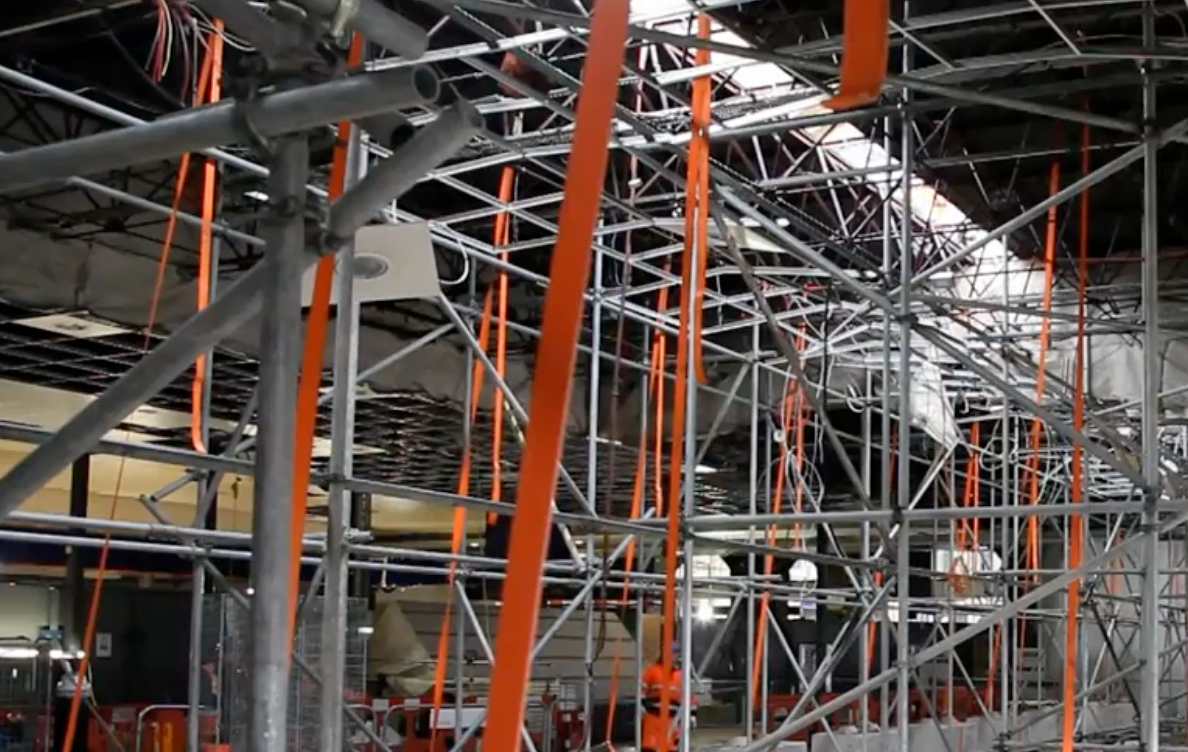
One of the reasons the structure lingered so long was fear. The geodesic support system holding it together was poorly understood. No one quite knew how to safely dismantle it.
But one man knew how not to do it.
Richard Dolman, a farmer, engineer and demolition expert, had previously suffered a partial collapse involving a similar structure. Rigorous safety procedures ensured no one was injured and the demolition could continue safely. Afterwards, he openly presented the findings at an industry demolition conference.
Not in secret. Not hidden away.
Publicly.
The presentation of failure won him the Kings Cross contract.
I know because I later filmed his company removing the structure safely, and he explained that his honesty about what had previously gone wrong formed part of the reason they trusted him with one of the most sensitive demolition projects in the country.
The canopy removal in 2013
That story has stayed with me for years because it cuts against modern marketing instincts.
Most companies instinctively want to present perfection. Particularly in retrofit, solar and home energy systems where margins are tight, competition is fierce and public understanding is often limited.
But increasingly I am not convinced perfection is what technically-minded customers are actually looking for.
When we spoke to Kevin Holland from Solar Nation recently, one thing became very clear. Demand for solar is extremely strong.
But so is consumer caution.
Partly because as demand rises, opportunists enter the market alongside serious professionals.
The difference between lead-generation solar companies and the firms likely to survive the next decade is evidence.
Polished testimonials suck.
Operational proof wins.
Real installs. Real commissioning. Real constraints. Real optimisation decisions. Real homeowner hesitation. And occasionally, real mistakes.
Because consumers are changing.
Five years ago many homeowners simply wanted reassurance.
Today they increasingly want verification.
They want to know:
- what happens when something goes wrong
- whether the installer understands edge cases
- whether systems were optimised rather than simply sold
- whether the battery was sized properly
- whether commissioning problems were solved intelligently
- and whether the company standing in front of them has enough confidence to discuss difficult moments openly.
Ironically, acknowledging imperfection is often one of the strongest signals of competence.
Anyone can film a clean plant room after commissioning.
Far fewer are willing to explain the difficult decisions, failed assumptions, installation constraints or lessons learned along the way.
But those moments are often exactly what persuade technically-minded customers they are dealing with professionals rather than salespeople.
That is partly why documented case studies are becoming so valuable in retrofit and solar.
Not because they function as glossy advertisements.
But because they function as evidence.
Evidence that somebody has done the work before. Evidence they understand complexity. Evidence they can navigate problems without panic.
Richard Dolman did not win the Kings Cross demolition contract because nothing had ever gone wrong.
He won it because when something had gone wrong, he understood exactly why.
More importantly, he was prepared to explain it publicly.
As retrofit, solar and home energy systems become more complex, that distinction may become increasingly important.
Because in technical industries, transparency is not necessarily weakness.
Sometimes it is evidence of mastery.