
VIDEO: No-Radiator Man Eats Humble Pie "The Price of Innovation"
Sometimes you have to pivot.
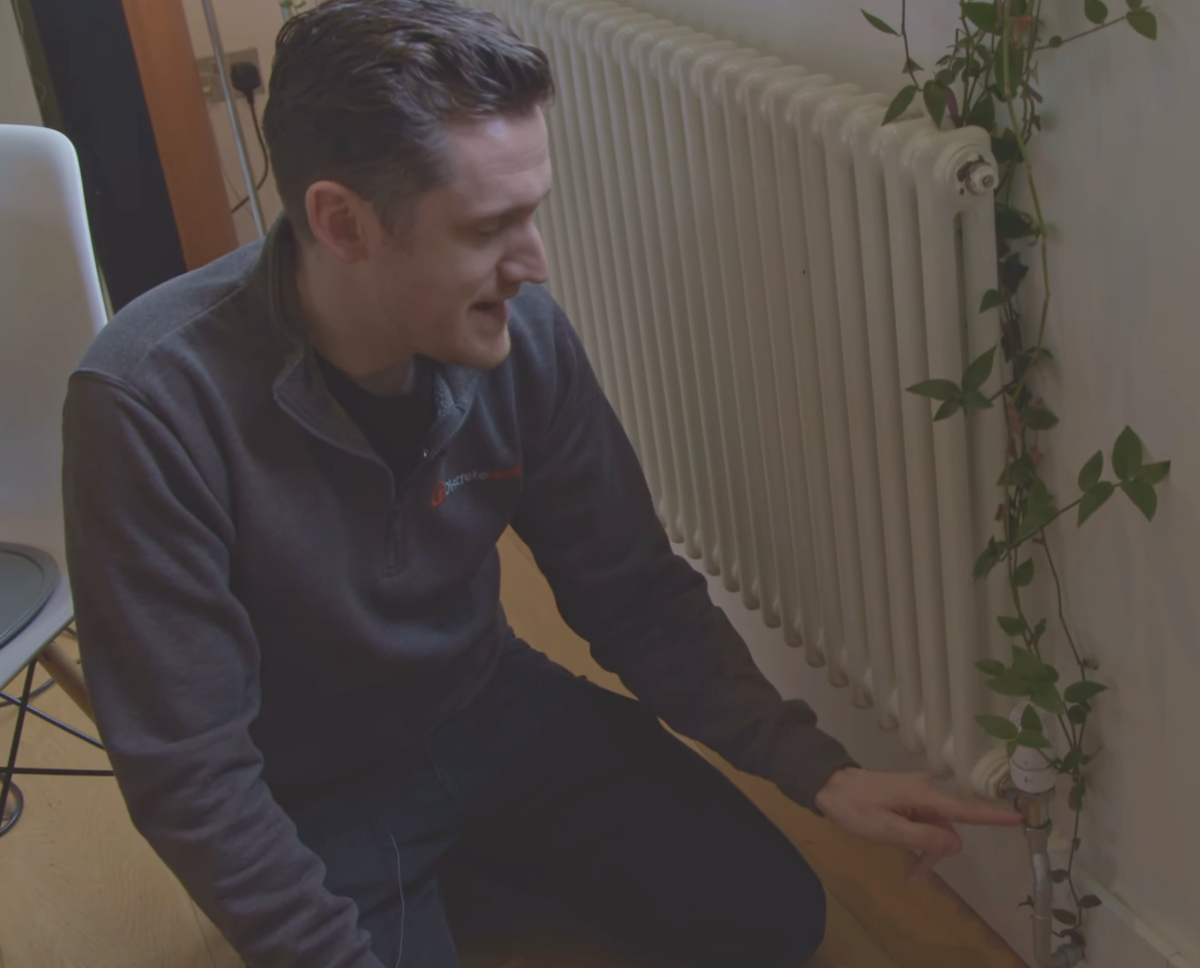
The public conversation around retrofit innovation is often strangely simplistic. A product appears. A company launches a brochure. A stand turns up at an exhibition. And from the outside, it can look as though innovation simply arrives fully formed.
It rarely does.
Behind almost every apparently “simple” retrofit solution sits years of engineering compromise, tooling investment, testing cycles, manufacturing risk, installer feedback, redesign, dead ends and commercial exposure that most of the market never sees.
Which is partly why the story emerging around DiscreteHeat’s entry into the Big Retrofit Challenge represents the true friction, and cost of innovation.
Add2Rad to some sceptics is simply an existing company repackaging an old idea. Thermaskirt sold differently.
That is not true.
What is happening here is much closer to a company climbing through the Technology Readiness Levels (TRLs) in real time while operating inside live occupied homes.
Way beyond the romanticised idea of some dotty inventor in a potting shed.
The retrofit sector often talks about innovation as though it begins and ends with invention. In reality, invention is usually the easy part. The hard part is industrialisation.
- Can you manufacture it consistently at scale?
- Can installers fit it quickly and reliably?
- Can it integrate with existing heating systems and legacy infrastructure?
- Can it survive real-world customer behaviour rather than controlled test conditions?
- Can it work inside imperfect homes with awkward layouts, constraints and compromises?
- Can it deliver all of this affordably enough to scale beyond pilot projects?
That is where technologies either mature or die.
Add2Rad sits directly inside that difficult middle ground between concept and mass deployment. The visible part is relatively straightforward: supplementary low-temperature heated skirting that works alongside existing radiators to help homes become heat-pump ready without major disruption.
Underneath that visible layer sits something much more substantial. New extrusion tooling, die sets. New manufacturing processes. New installation methodologies. New hydraulic integration approaches. New surveying logic. New design assumptions around low-temperature retrofit. New installer workflows. It's exhausting to write, let alone do it.
Critically, all of this has to be tested not in laboratory conditions, but inside real homes occupied by real people with real expectations around comfort, disruption, aesthetics and cost.
That process is expensive.
Not speculative-startup expensive in the Silicon Valley sense. Retrofit-expensive. Manufacturing-expensive. Process-expensive. The kind of cost burden carried by companies trying to bridge the uncomfortable gap between prototype and trusted deployment.
And DiscreteHeat are not alone in that position at the Big Retrofit Challenge.
Companies like Kestrix, Wrapt Homes, IoT Solutions Group, Healthier Technology and Vundahaus are not people emerging from garages with half-finished sketches and speculative pitch decks. Most already operate commercially. Most already have functioning products, teams and customers.
But what they are attempting to do is move technologies, systems and delivery methods into a higher state of maturity.
That means proving repeatability.
Proving manufacturability.
Proving reliability.
Proving scalability.
Proving that retrofit can become operational rather than experimental.
And that is where the sector often becomes confused about what innovation actually costs.
The public sees a finished install and assumes the challenge was fitting it.
The real challenge was everything required before that install could happen consistently.
For DiscreteHeat specifically, there is an irony sitting at the centre of this project.
For years, the company built its identity around removing radiators altogether. Thermaskirt was partly philosophical: reclaim wall space, simplify low-temperature heating and rethink emitters entirely.
But real-world retrofit has a habit of humbling ideology.
The moment installers enter occupied homes, they collide with emotional realities that engineering diagrams ignore. Homeowners do not want weeks of disruption. They do not want floors lifted. They do not want every room aesthetically redesigned in pursuit of decarbonisation targets.
And so the “anti-radiator” company found itself confronting an uncomfortable truth:
The fastest path to heat pump adoption may not be replacing radiators.
It may be helping them survive.
That pivot is not failure. If anything, it demonstrates technological maturity. The willingness to stop defending a perfect theoretical solution and instead engineer something deployable at scale in ordinary British homes.
The Highgate project featured in DiscreteHeat’s latest case study captures that shift perfectly.
A carefully rebuilt home sitting inside the footprint of a 19th century waterboard cottage. Original brick reused. Existing architectural language preserved. Strong design preferences throughout the property. Existing radiators retained not because the homeowner rejected innovation, but because the realities of the house demanded negotiation rather than replacement.
And suddenly Add2Rad becomes more than a product.
It becomes a bridge technology.
A transitional system capable of helping existing homes move toward low-temperature electrified heating without triggering the level of disruption that causes many retrofit journeys to collapse entirely.
That is precisely the kind of problem the Big Retrofit Challenge is supposed to surface.
Not theoretical perfection.
Deployable progress.
If the UK is serious about scaling heat pumps, fabric upgrades and electrified heating across millions of existing homes, then the sector will need more than invention.
It will need mature, manufacturable, financially survivable innovation capable of operating in the messy complexity of the real world.