
Homeowners Are Hungry For Advice - Who's Feeding Them?
Searching to achieve a better tariff for a new battery and solar set up, we found a hidden resource and a consumer information vacuum.
Irrespective of your view on world events, politics or climate - you bills to run your home are going up. That means millions of Britons are searching for solutions.
In the race to define what an 'optimised' energy solution looks like for their homes, Britains consumers are going to the people trusted with fixing their homes for advice. And demand is growing.
IYKTYK
In the tight nit world of energy installers you will have possibly heard of the names Leah Robson, Szymon Czaban, or Sean Hogan. But for consumers, these people represent something different. These the knowledge keepers, the truth tellers, and the lighting rods of information people are hugy to learn from.
They are helping to answer questions that the wider energy industry has struggled to explain in language that homeowners can understand.
What should I install? How much will it cost? Will it actually save me money? And perhaps most importantly, how do I know I'm being given the right advice?
People aren't questioning the validity of renewable energy, and they are are basing their questions around their lived experience not abstract ideas. They are decisions involving thousands, sometimes tens of thousands, of pounds of household expenditure.
And increasingly, homeowners are turning to YouTube to find the answers.
More Questions than Answers
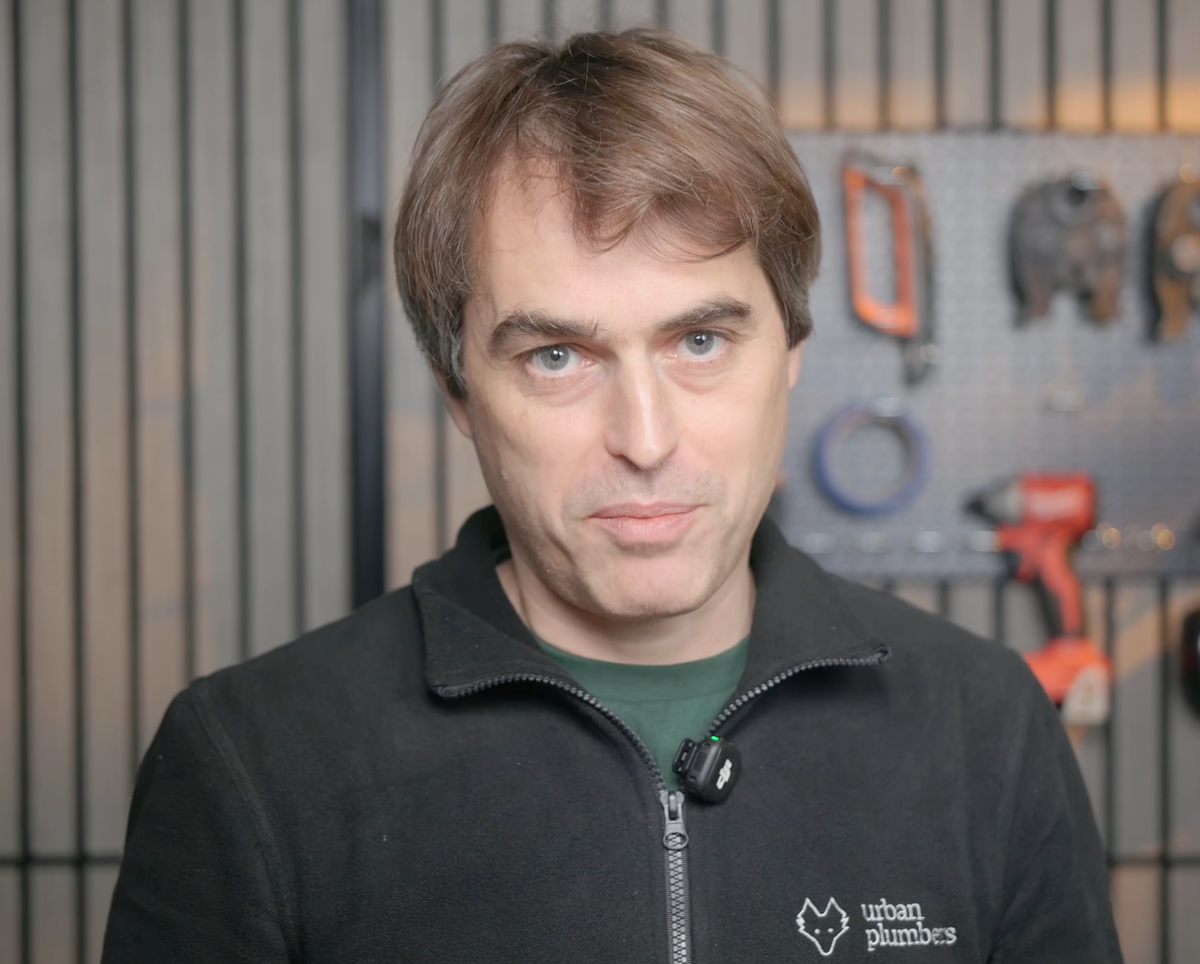
In a recent film published by Urban Plumbers, founder Szymon Czaban joined Steph, founder of energy modelling software company Spruce, to explore a deceptively simple question: how big should your home battery be?
The answer, as the film demonstrates, is anything but simple.
"If you ever tried to size a house battery, you know it can get complex pretty quickly," Czaban explains.
"Before you know it, you've got more questions than answers."
The film takes viewers through the complicated relationship between heat pumps, solar PV, battery storage, electricity tariffs and the costs of upgrading a home's heating system.
Using Czaban's own home as a working example, Spruce demonstrates how modelling different combinations can produce some surprising results.
A smaller battery might deliver a faster financial payback. Keeping existing radiators and operating a heat pump at a higher flow temperature might, in certain circumstances, make more financial sense than spending thousands on replacements.
The point is not that one solution is universally better than another.
It's that without the information, homeowners cannot properly compare the choices.
26,000 views. One overwhelming question.
Within 24 hours of publication, the film had attracted approximately 26,000 views.
But it wasn't simply the viewing figures that caught our attention.
It was what happened underneath the film.
At the end of the demonstration, Czaban asks whether an EPC-based version of the Spruce software could be made available to the general public.
Steph explains that the software is currently available only through installers, but invites viewers to comment if they would like access.
And comment they did.
Analysis of 119 top-level comments on an Urban Plumbers video featuring Spruce found that almost half explicitly requested homeowner access to energy modelling tools.
A further 41% primarily discussed technical or financial questions about domestic energy systems. Several viewers also expressed willingness to pay for access.
Who Owns the Answers?
The response to the Urban Plumbers film raises an interesting question for the retrofit industry.
If homeowners are actively seeking independent information, sophisticated modelling and transparent financial comparisons, should those tools remain principally in the hands of professionals?
Or could opening them up to consumers improve the quality of conversations between homeowners and installers?
There are legitimate reasons why professional design tools require expertise. Poor inputs can produce misleading outputs, and no software model can replace a competent survey or installation design.
But there is a considerable difference between giving a homeowner the tools to explore their options and expecting them to design an entire heating system themselves.
The Appetite for Answers
The response to this single video is not proof of a nationwide movement. Its audience is self-selecting, technically engaged and explicitly invited to comment.
But it offers a revealing glimpse into the questions being asked by homeowners already considering investment in cleaner, cheaper-to-run homes.
They want to know what works.
They want to know what it costs.
They want to know whether the figures stack up.
And increasingly, they want the opportunity to check the answers themselves.
Innovations in clean heat and renewable tech are not going to stop but the likely winners in providing solutions in this space - are the companies, installers and organisations that provide the tools consumers want - information first.
Which builds trust.
There is an opportunity here, for you to offer 'lite' consumable information tools.
Are you providing your audience with what they need?