
When Cold Air Isn’t the Problem
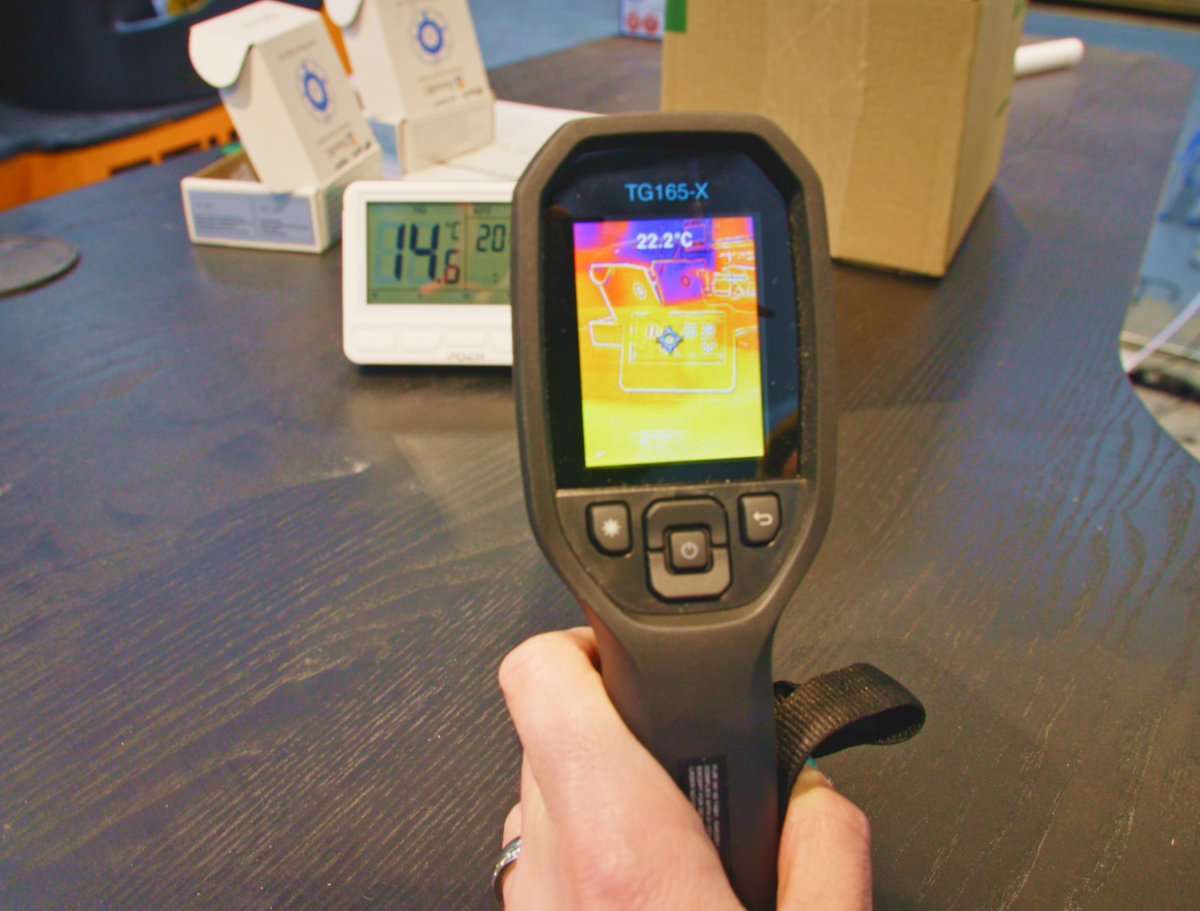
At a recent factory visit, a group of housing professionals stood inside a large industrial space on a cold day.
The air temperature was uncomfortable. You could see your breath.
But something didn’t feel right.
People were warm.
Above them, suspended from the ceiling, were slimline infrared panels from NexGen Heating. No roaring plant room. No hot air blasting from ducts. No radiators clanking into life.
Just radiant heat.
You could stand directly beneath the unit and feel warmth on your skin, even while the surrounding air remained cold.
That is not convection. It is physics.
Infrared does not heat the air first. It heats surfaces and people directly. The sensation is immediate because your body absorbs the radiation in the same way it absorbs sunlight.
And for retrofit, that changes the conversation.

NexGen are a British Company. Making a global solution.
The Right Technology in the Right Context
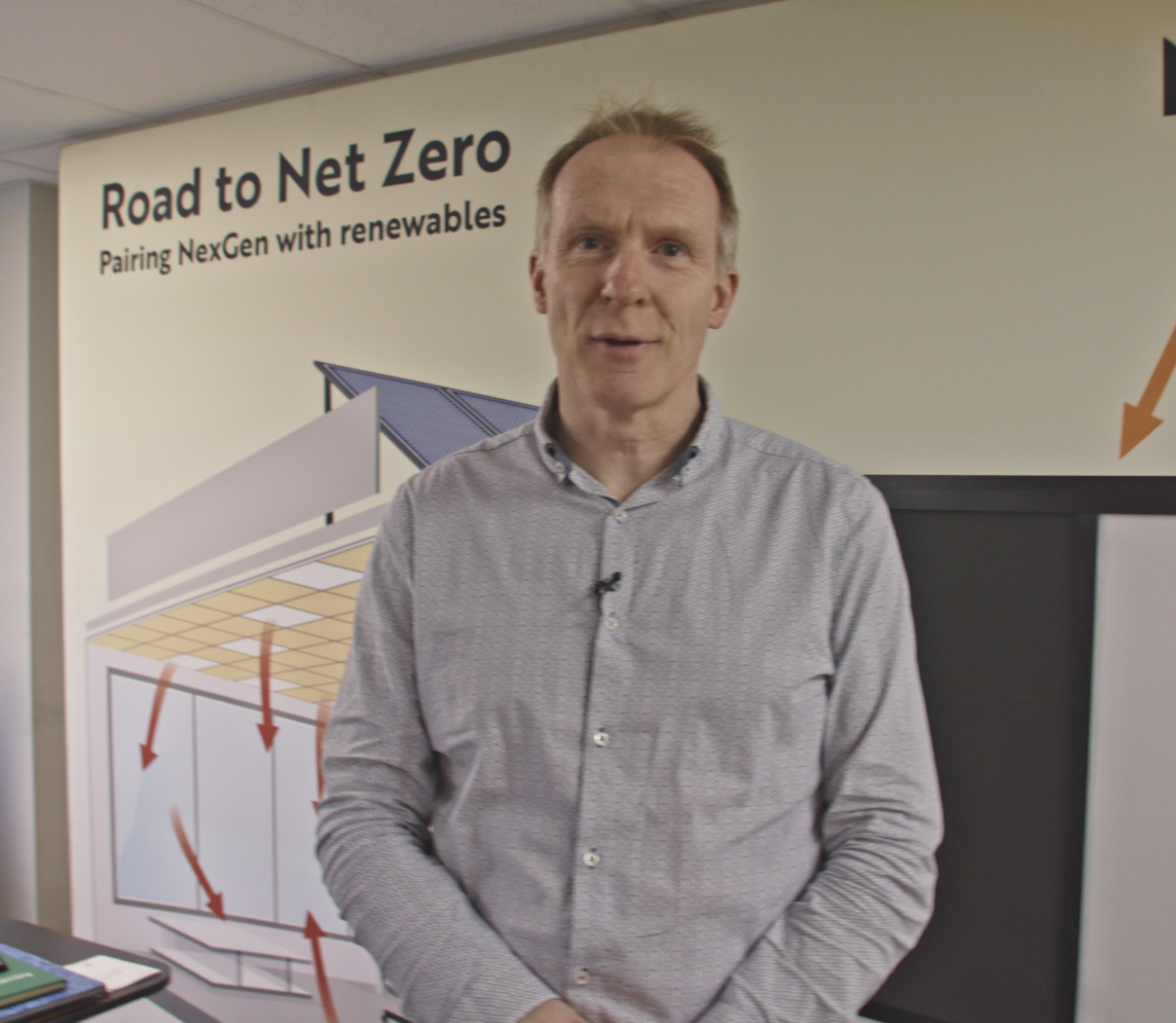
In the accompanying video, Ben Earl from Abri Homes talks about the importance of appropriate technology.
Not silver bullets. Not ideology. Not one solution rolled out at scale.
Appropriate technology.
Housing associations like Abri are managing complex portfolios. Victorian terraces. Concrete system builds. High rise blocks. Electrically heated flats. Rural off gas properties. Properties where wet systems are failing. Properties where upgrades must be low disruption.
The question is never “what is the best heating system in theory?”
It is “what works here?”
In large volume spaces, intermittently used buildings, poorly insulated industrial settings, or dwellings where installing pipework is invasive and expensive, radiant ceiling heating starts to make practical sense.
You are not trying to raise the temperature of thousands of cubic metres of air.
You are trying to make occupants comfortable.
That is a different design objective.
Comfort Versus Air Temperature
We often equate warmth with air temperature. But thermal comfort is more complex.
If the air is 14°C but your skin is being gently warmed by radiant panels, you can feel comfortable. If the air is 20°C but surrounding surfaces are cold and pulling heat from your body, you can feel chilled.
Radiant systems shift the balance.
In the factory visit footage, you see visitors standing beneath the ceiling units. The space is visibly cold. But their posture tells you something else. They are relaxed. They are not shivering. They are not clustered around a single heat source.
The heat is directional and targeted.
For certain retrofit scenarios, that matters.
Retrofit Is About Constraints
Abri are not looking at NexGen as a universal replacement for everything else.
They are looking at it as part of a toolkit.
That distinction is critical.
Retrofit in the UK is not a clean sheet design exercise. It is compromise, constraint, tenancy management, budget limitation, grid capacity, planning rules and resident behaviour.
Infrared ceiling panels can:
• Avoid pipework installation
• Reduce disruption in occupied homes
• Eliminate wet system maintenance risk
• Allow zoning room by room
• Suit intermittently used or high volume spaces
• Integrate easily with electrical upgrades
They are not suitable everywhere. But where they are suitable, they can be elegant.
And sometimes elegance in retrofit means simplicity.
Electrification Without Complexity
There is a tendency in the sector to assume that electrification must mean high capital complexity.
Heat pumps. Hydraulic separation. Buffer tanks. Oversized emitters. Control strategy redesign.
All valid. All necessary in the right building.
But there are also buildings where a simpler electrical heating solution fits the constraint envelope better.
When the ceiling is accessible.
When disruption must be minimal.
When usage patterns are intermittent.
When a wet system has reached the end of life.
That is the space NexGen is being evaluated in.
Not as a headline grabbing revolution. As a practical option.
Seeing It Working
The power of the factory footage is not theoretical modelling. It is lived experience.
Visitors step into a cold industrial environment.
They stand beneath the panels.
They feel warm.
That is often how retrofit decisions are made. Not through abstract debate. Through observation.
Appropriate technology is contextual.
Ben Earl’s point is not that one system wins.
It is that portfolios require nuance.
And nuance requires evidence.
If we are serious about decarbonising housing at scale, we need to keep expanding the evidence base around what works where.
Infrared ceiling heating is not new. But its role in social housing retrofit is still being explored.
Abri are asking the right question.
Not “is this fashionable?”
But “is this appropriate?”
And that is where the real progress happens.