
weinerberger Enter The Retrofit Game

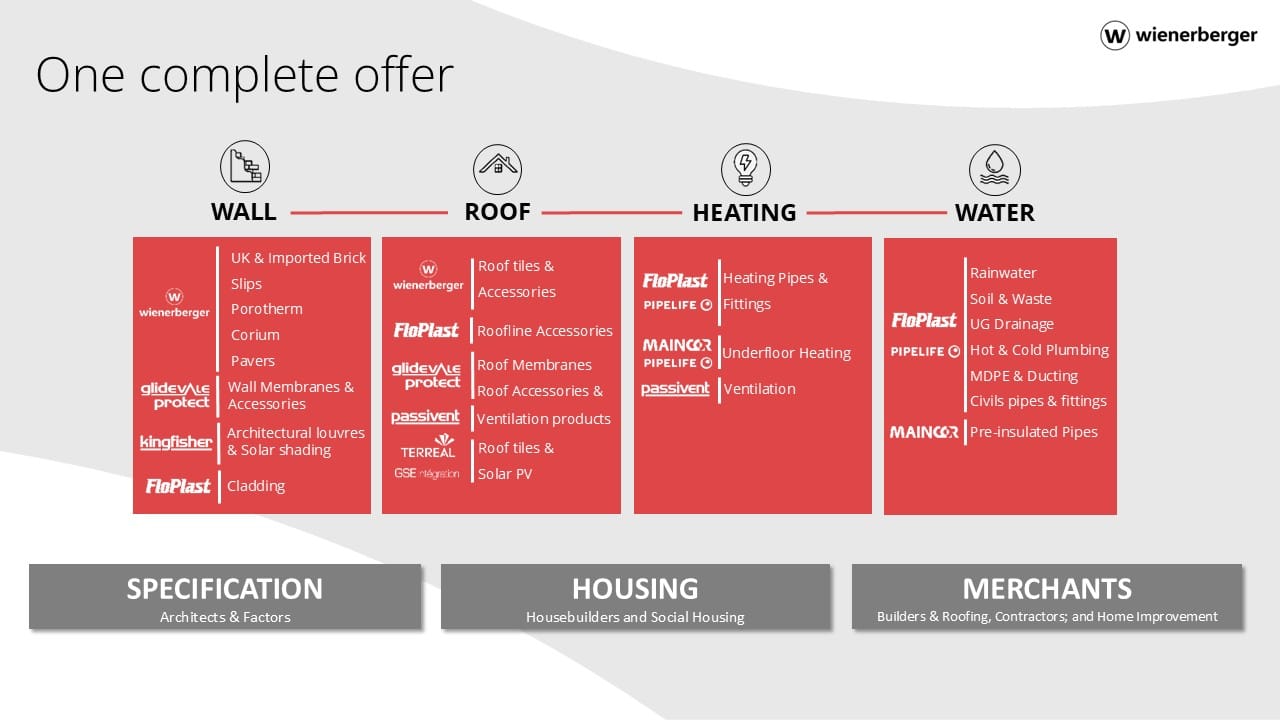
When I attended the wienerberger open day, what struck me most was not the test houses themselves. It was the shift in posture from one of the world’s largest building materials companies. wienerberger is a $4 billion business. For decades it has existed in the background of construction, supplying products into projects designed and delivered by others. What it signalled in Liverpool was transitional. It is now presenting itself as a whole-house retrofit solution provider.
That may sound like a subtle change, but in the context of the UK retrofit market it is significant. Instead of selling individual materials into a fragmented supply chain, wienerberger is positioning its Renatus system as a coordinated pathway for upgrading existing homes.
Who's In The Fan Club - LJMU
The demonstration houses built with Liverpool John Moores University are intended to prove that approach. Three homes representing common British housing types from the 1920s, the 1970s and the 2010s have been retrofitted and instrumented so researchers can monitor energy performance, air quality and comfort over time. The results already suggest that whole-house upgrades can dramatically improve energy performance, with one of the older homes moving from EPC D to EPC A.
The presence of Liverpool John Moores University is not incidental. LJMU is one of the country’s centres of expertise in building physics, and Liverpool itself is emerging as a hub for retrofit research through projects like PHIRST.
By partnering with a university and building a monitored research platform, wienerberger is aligning its proposition with evidence rather than marketing. The houses are effectively being used as a controlled laboratory where energy use, moisture, indoor air quality and occupant behaviour can be studied over time.
Retrofit has long struggled with credibility. For years the sector has been characterised by fragmented supply chains, poorly integrated specifications and inconsistent performance.
Councils and housing providers have often found themselves navigating a maze of products, consultants and contractors in order to deliver upgrades that sometimes fail to perform as expected. By presenting a tested and monitored system, wienerberger is attempting to simplify that complexity. The promise implicit in the Renatus concept is that a housing provider could adopt a proven specification rather than inventing a retrofit strategy from scratch.
Positioning The Teams
That positioning places wienerberger in an interesting competitive space. It is not directly competing with installers, and it is not quite doing what organisations such as Vibrant Energy Matters do either.
Companies like Vibrant Energy Matters operate closer to the assessment and compliance layer of retrofit, producing EPCs and coordinating networks of suppliers who deliver upgrades on the ground. wienerberger is approaching the same outcome from the opposite direction. Instead of starting with assessment and coordination, it is starting with the physical system itself: materials, construction methods, sequencing and a validated retrofit template.
Both models ultimately converge on the same ambition. Each represents an attempt to impose order on a complicated market. The difference is that one is rooted in data and coordination, while the other is rooted in the physical architecture of the building fabric.
For councils and housing associations, the appeal of wienerberger’s approach is obvious. Local authorities are under immense pressure to improve the energy performance of housing stock while operating within strict financial constraints.
In the presentation I saw, it was clear that the company is attempting to frame its offer around those realities. The message was not about ideal retrofit budgets or theoretical performance targets. It was about working within the budgets councils already have and delivering measurable improvements within those limits.

At the same time, the emergence of integrated retrofit systems raises legitimate questions. Large turnkey frameworks can sometimes create layers of procurement and subcontracting that inflate costs.
In construction more broadly, tier-one contractors frequently sit above one or two layers of subcontractors, each adding margin as projects pass through the chain. If system-based retrofit becomes dominated by large frameworks, there is a risk that similar dynamics could emerge here. Whether wienerberger’s model simplifies delivery or simply reshapes the hierarchy will depend on how it is deployed in practice.
What is undeniable is the signal this move sends to the wider retrofit sector. When a global materials manufacturer of wienerberger’s scale begins presenting itself as a whole-house retrofit provider, it reflects a growing confidence that this market is real and durable. Companies of that size do not reposition themselves lightly. They do so when they believe structural change is underway.
In that sense, the open day in Liverpool was not really about three experimental houses. It was about the maturation of retrofit itself. For years the sector has been treated as a policy aspiration or a niche area of construction. Increasingly it is becoming something else: a structured industry attracting serious capital, serious research and serious competition.
On The Pitch
The retrofit landscape is therefore about to become much more crowded. New frameworks, new supply chains and new systems are beginning to form as different actors attempt to define how large-scale housing upgrades will actually be delivered. wienerberger is one of the first major materials companies to step forward with a fully articulated system, but it will not be the last.
The question for the sector now is not whether retrofit will industrialise, but who will shape that process. The field is opening rapidly, and multiple players are positioning themselves to control different parts of the value chain. In that sense the metaphor of a football pitch applies. The teams are gathering, the crowd is growing, and the game is only just beginning. The goal, however, is wide open. The only remaining question is who will score first.