
The Rise of DIY Retrofit
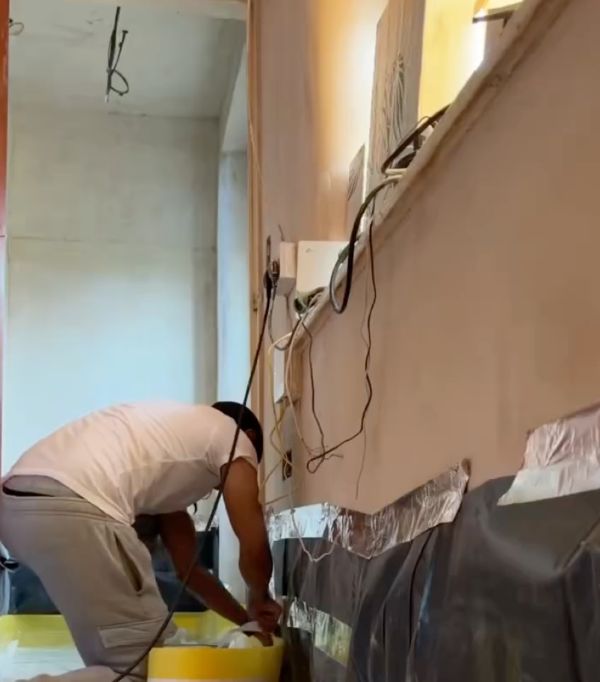
Something fundamental is changing in UK retrofit, and it is not being driven by trend, novelty, or a sudden national enthusiasm for power tools.
It is being driven by necessity.
An ageing construction workforce, rising energy costs, and the failure of delivery mechanisms designed to protect the most vulnerable are colliding with a public that can no longer afford to wait, financially or practically, for perfect solutions.
In that gap, DIY retrofit is emerging. Fast.
An industry with fewer hands
The UK construction and building services workforce is ageing out. Plumbers, heating engineers, electricians, and general builders are retiring faster than they are being replaced. Training pipelines are thin. Lead times are long. Costs are rising.
For many households, especially outside major cities, the challenge is no longer whether to retrofit but whether anyone is available to do it.
When labour becomes scarce, work gets prioritised. Large contracts come first. Smaller jobs wait. Minor improvements get postponed. And homeowners who are motivated to act find themselves stuck.
DIY retrofit is, in part, a response to this structural shortage. Not a rejection of professionals, but a way of progressing while waiting for them.
Energy costs turn delay into risk
At the same time, energy price volatility has changed the emotional framing of retrofit.
Lower bills are no longer a future benefit. They are a present defence.
When heating costs spike, poorly performing homes stop being an inconvenience and start being a liability. Waiting several years for a full system upgrade is not always viable. People need relief now.
That is why so much of the DIY activity being shared focuses on small, targeted interventions. One room insulated. One heating zone improved. One draught reduced. One floor upgraded.
These are not lifestyle projects. They are risk management.
When the safety net fails
There is also a harder truth sitting underneath this shift.
The failure of delivery under the Energy Company Obligation and it's cliff edge closure - has left thousands of vulnerable households worse off, not better. Poor quality installs, remediation backlogs, and scheme disruption have undermined trust. As the scheme winds down and resets, it is the least well off who are most exposed.
For households who were meant to be protected by policy, delay is not neutral. It is harmful.
Cold homes do not wait for programme reform. Damp does not pause for procurement cycles. Energy bills do not soften while contracts are retendered.
In that context, DIY retrofit is not a lifestyle choice. It is often the only available path to improvement for people who cannot access professional help, cannot wait for schemes to stabilise, and cannot afford to do nothing.
This is a deeply social issue, not a niche behaviour.
From full retrofit to incremental gain
What is striking about the current wave of DIY retrofit content is its realism.
Most people are not attempting whole house transformation. They are breaking retrofit into steps that match their budgets, time, and confidence.
Underfloor heating kits, emitter upgrades, insulation trials, window improvements. Each change delivers a measurable improvement. Each success builds confidence for the next step. You can scope out TikTok, Youtube or any of the social platforms and find examples of home upgrades;
This incremental approach mirrors how households already manage financial risk. It also mirrors how retrofit is increasingly being delivered professionally, in phases rather than as a single disruptive event.
DIY is simply moving that logic upstream.
Confidence, not competence
One of the most persistent myths in retrofit is that people are unwilling to engage because the work is too complex.
The evidence suggests something else.
What many homeowners lack is not competence, but confidence.
They do not know where the safe boundaries are. They are unsure which tasks are reversible, which require sign off, and which are sensible to attempt. Once those lines become clearer, participation increases rapidly.
This is visible in how people learn.
On traditional forums like BuildHub, advice is often delivered with certainty and authority. That serves experienced self builders well, but can feel exclusionary to newcomers.
On social platforms, the tone is different. People share attempts, mistakes, revisions, and learning in public. Advice is conversational. Support is collective. The emphasis is on progress rather than perfection.
Confidence grows through visibility.
Seeing retrofit working
Physical demonstration plays a similar role.
Places like the National Self Build & Renovation Centre allow people to experience retrofit outcomes directly. Warm floors. Quiet rooms. Improved comfort. Real buildings, not diagrams.
Once someone has felt the difference, the abstract fear around retrofit dissolves. It becomes something tangible and achievable rather than theoretical and risky.
That shift from abstraction to experience is critical.
Why this matters
DIY retrofit is not about replacing skilled trades. It is about adapting to a reality where skills are scarce, energy costs are high, and policy safety nets are currently failing the people who need them most.
Homeowners are responding rationally.
They are taking on what they can, learning as they go, and seeking professional input where it is essential. They are not opting out of expertise. They are sequencing it differently.
For an industry facing workforce shortages and a public under pressure, this is not a threat. It is a release valve.
This series will track that change through observation rather than statistics. Through the spaces people learn, the content they share, and the confidence they build.
Because once retrofit becomes something people feel able to participate in, even partially, the pace of change accelerates. And confidence, once earned, rarely retreats.