
Positioning: Retrofit and Aesthetics
Most retrofit products fail long before cost, performance, or policy come into play.
They fail at the moment of decision.
Not because homeowners reject efficiency, but because retrofit keeps turning up in the wrong room of the house, at the wrong moment, with the wrong conversation.
Renovation is not a technical process. It is a psychological one. People do not renovate “systems”. They renovate spaces, surfaces, and feelings. Retrofit only succeeds when it understands where that thinking actually happens.
Ethan Wadsworth understood this early with DiscreteHeat’s ThermaSkirt. He did not position it as a plumbing product. He placed it near decorating. Skirting boards live in the mental space of “I’m redoing this room,” not “I’m replacing a heating system.” This subtle tweak is incredibly effective. Ethan calls it category hijacking. In practice, it is about cognitive timing.
People renovate in sequences, not frameworks.
If you imagine the moment you want to repaint a room, that's when you're thinking about flooring, moving sockets. Think about the mental gymnastics required to update a bathroom or kitchen.
 Condé Nast
When you gentrify your house, why not sort the heating out too.
Heating, insulation, electrics, ventilation all get pulled along only if they surface at the same moment the aesthetic decision is being made.
This is why renovation remains Britain’s biggest untapped retrofit inflection point, something explored in more depth in Renovation is Britain’s biggest retrofit inflection point.
Retrofit keeps missing that window.
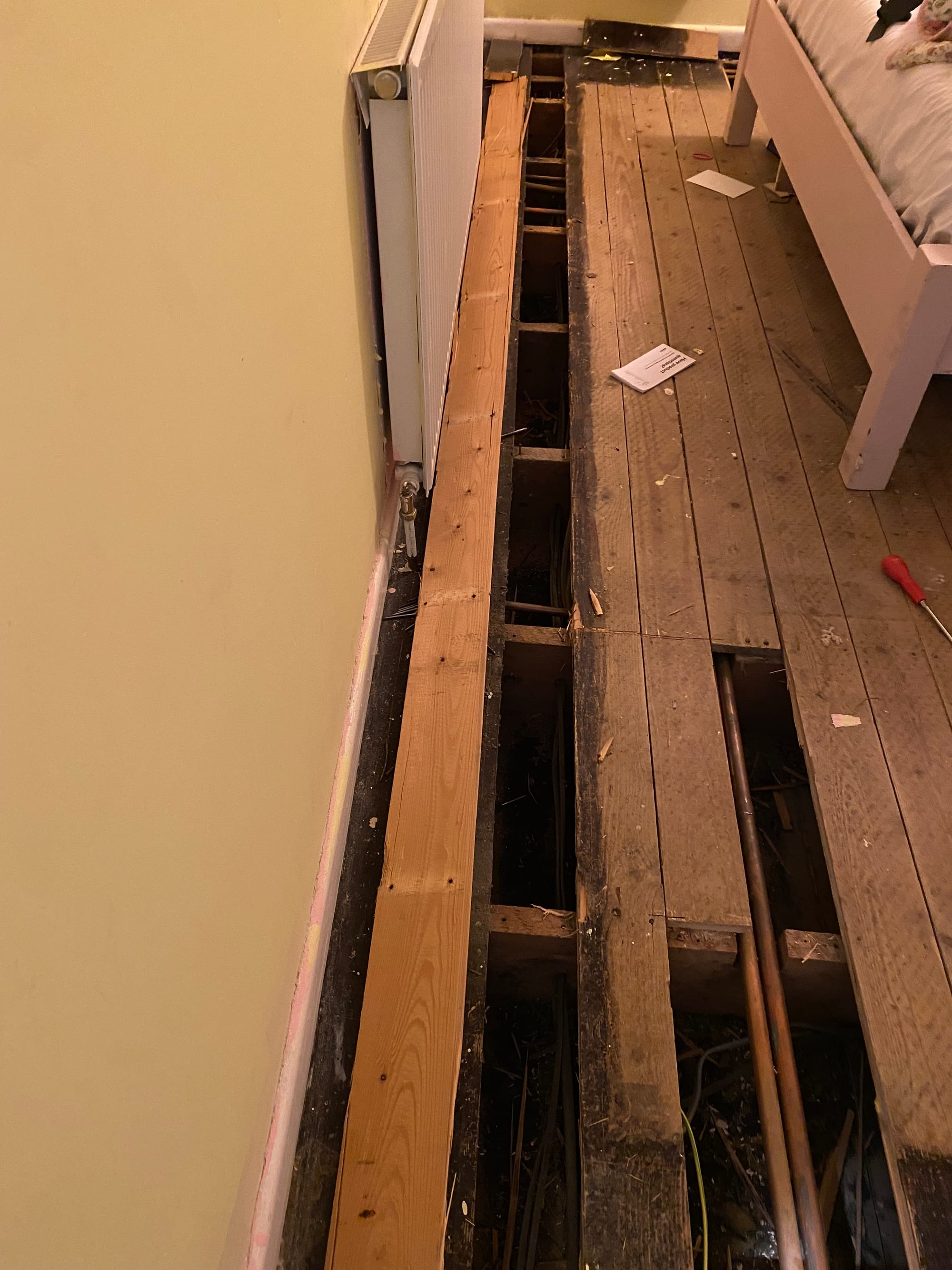
Take electrification of heating. Most homeowners do not wake up wanting to electrify. They decide to redecorate.
That is when sockets are moved, circuits are upgraded, floors are lifted, and walls are opened. If electric heating products appear alongside lighting plans, socket layouts, and room redesigns, they become part of the same decision. If they appear later as a “heating discussion”, they feel disruptive and expensive.
The same adjacency logic applies across retrofit.
Heat pumps should sit next to insulation, not boilers.
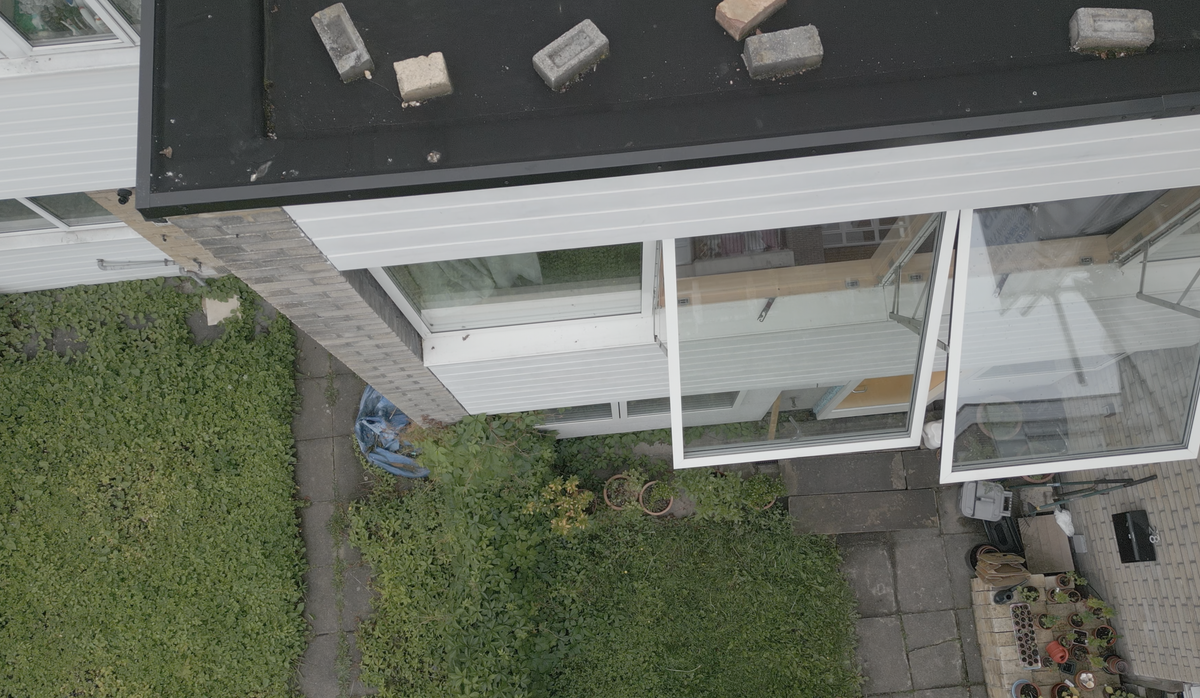
This house extension was the point where heating became a problem. Guess who fixed it?
People think about warmth when they touch fabric, not when they look at plant rooms. External wall insulation, loft insulation, airtightness products, emitters, controls, and heat pumps are one comfort conversation, not separate trades.
Groundwater or rainwater harvesting should sit next to landscaping and drainage, not sustainability.
People engage with water when they redesign gardens, driveways, patios, and extensions. That is when soakaways, attenuation tanks, and harvesting systems make intuitive sense. Placed next to “eco tech”, they feel optional.
Placed next to paving and groundworks, they feel practical.
Mechanical ventilation belongs with kitchens, bathrooms, and joinery.
Nobody shops for ventilation. They shop for quiet kitchens, mould-free bathrooms, and clean finishes. MVHR, MEV, and extract systems land better when framed as protecting finishes and comfort, not meeting standards.
Controls belong with lighting and switches, not manuals.
Smart thermostats, zoning systems, and energy management tools should appear where people are choosing dimmers, switches, and sockets. That is where control already lives in the homeowner’s mind.
Thermal upgrades belong with finishes, not spreadsheets.
Underfloor insulation, acoustic layers, vapour control, and thermal membranes should sit alongside flooring choices, not EPC calculations. People commit when the disruption is already priced in.
This is not rocket science. It is about physical and digital placement.
In the physical world, retrofit products should sit where renovation decisions already happen. Showrooms. Decorators’ merchants. Electrical wholesalers. Kitchen studios. Flooring suppliers. Trades who already have permission to touch the house.
In the digital world, the same rule applies. You do not wait for someone to search “retrofit solution”. You show up when they search “new kitchen”, “redecorating costs”, “rewiring a room”, or “garden redesign”. You attach yourself to the moment of intent, not the moment of regulation.
This is why renovation-led retrofit outperforms retrofit-led renovation.
Retrofit does not need to win an argument. It needs to arrive on time.
The renovation cycle is already spending money. Already creating disruption.
Already opening walls and lifting floors.
Retrofit’s job is not to interrupt that process, but to join it.
These articles form a week of renovation content, prompted by the up and coming Winter Show at the NSBRC.


Renovation Winter Show 30th Jan - 1st February
This weeks stories about renovations are being sponsored by Halcyan Water. Find out more about their solutions as we release case studies of their fight against hard water and limescale each day for the rest of the week.
Find out more about our sponsor by watching this story;
SPONSOR CONTENT
Watch This Case Study - Saving Money, Stopping Limescale