
Op Ed: Stage 8 Was Always There
Is demolition a conflict between retrofit - or are they frenemys that should book a room? Section 8 - planning for the end of a buildings life as well as it's beginning - is the spark that could ignite this romance.
First, an origin story of a friendship that has survived death, loss and failure.
I've worked with the esteemed journalist Mark Anthony for over 10 years. I was desperately searching for employment in the independent sector of film making then known as social content - and I was a new Dad.
Social media was taking off, and Mark Anthony decided to start commissioning video content for his Demolition News service.
What followed was hundreds of videos, articles, a friendship that lasts to this day - and a mutual respect.
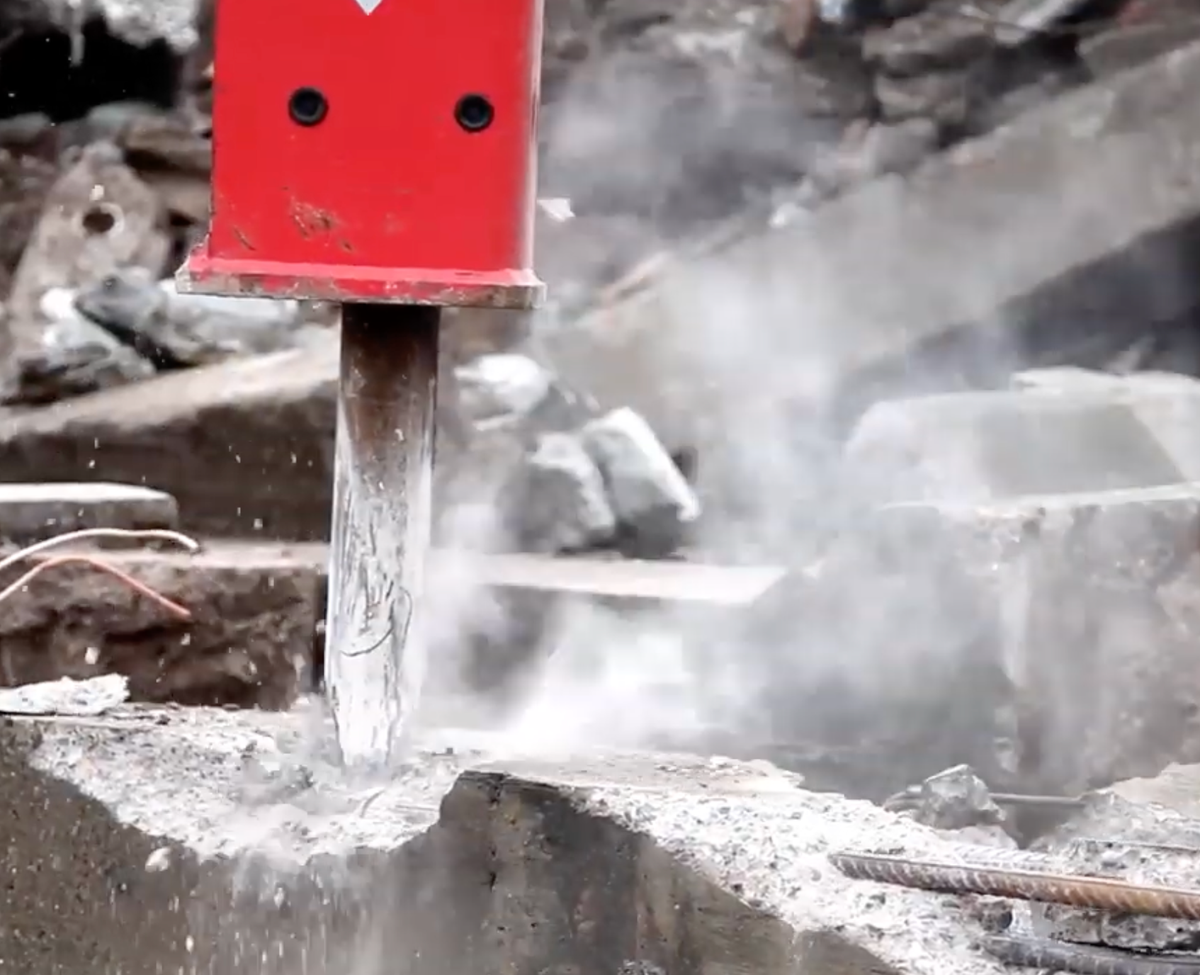
The Red Devil Video
Over the years we would grow a new magazine, following the stories of machines, demolitions and construction across the UK and Europe, ending in the birth of a magazine and social media behemoth Diggers and Dozers.
When Mark learned I was transitioning into covering the stories of retrofit, he supported with sage advice as I persistently bugged him for secrets on how to grow a publication. But this article is not about this new magazine - Refurb and Retrofit Magazine - it's about something Mark wrote.
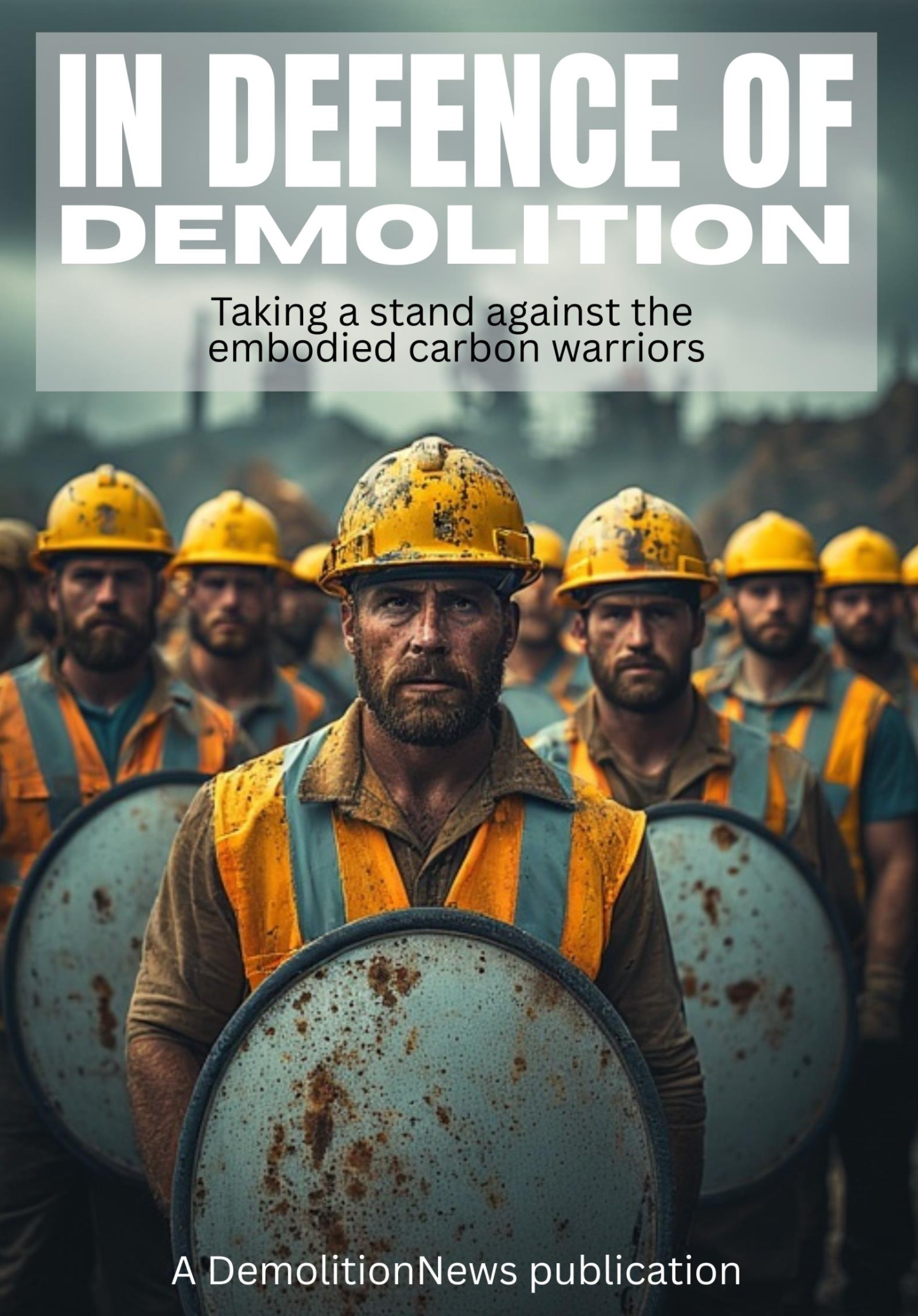
Demolition As Necessity
It's too easy to caricature demolition as the badass crusty destroyer of history. I refuse to do that. In fact the basis of the Red Devil film footage earlier in this article was originally to examine the demolition of a functioning quayside in Amsterdam.
Parts of the port had become inoperable because tankers had grown so fast in 10 years - they could no longer could berth in the recently built terminals - demolition was an adaption that was necessary.
It was an assumption that life in shipping would continue as before that made the calculation, wrongly, that quays could be this size, when they needed to be, that size.
The False War
And that's where we get to the discussion regarding embodied carbon. Surely, it's madness at this point in our rapid ascent into climate nihilism, that smashing age old buildings apart when they could be re-used, is just wrong.
That verdict, places retrofit as morally right, and demolition as indefensible. After finding out about his new publication - we interviewed Mark for the magazine. It begins.
"Demolition has been cast as the devil." - Mark Anthony
That position when adopted by councils, governments and professional bodies, artificially elevates retrofit and re-use as the only choice and demolition as an environmental sin.
“Decisions are made without looking at the whole picture” - Mark Anthony
Absolutism in this regard, is a problem, just as regarding one solution as the silver bullet can be too, which we know a lot about in retrofit. And deep in this publication Mark Anthony talks about the examples of when, in it's current form, a building truly is better off, recycled and dismantled. Or as he put's it bluntly in our interview -
“A moratorium [on demolition] does not work” - Mark Anthony
Enter Stage 8 - A Good Death
If you are British, you'll know we are crap at talking about death. We let our relatives fester in shit homes and with a failing health service, (just as easily as we slowly wake up to the rot on the minds of our children as they are left to fend for themselves on social media).
That distasteful ignorance, wilfully, of the circularity of life and the need to plan, and even rejoice in the end of times, was picked up by the erstwhile buildings advocate Ele George.
For those of you who don't know here - (Mark Anthony doesn't know Ele but she's relevant to his publication) - Ele is a firebrand.

She's an advocate of so many of the issues that this magazine stands for, but she's also a realist. Her recent post regarding the inclusion of more concentrated thinking about the end of life of buildings lays this out.
 Ele George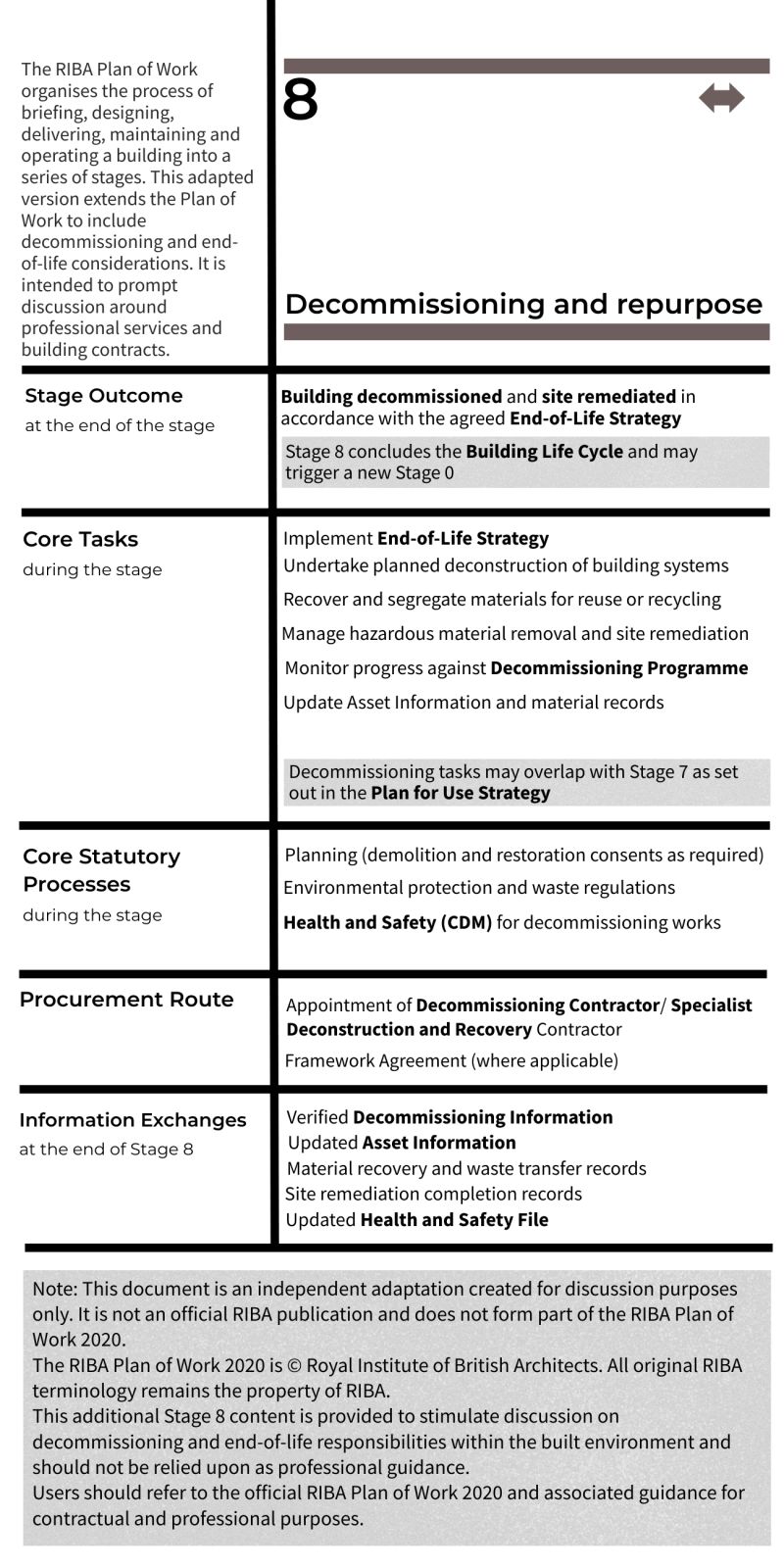
The Stage 8 Argument Posited By Ele George - With Acknowledgement to RIBA
If we stopping looking at a buildings demise as failure, but as a necessary lesson, expected and more importantly planned for. That's something that demolition experts have not only been advocating for, but are exceptionally good at dealing with.
A good demolition operator is a mortician, a recycler and a forensic scientist, unravelling the life, history and failure points, carefully and methodically until the body of a building is returned to the earth.
Demolition professionals have always dealt with decommissioning, but they could have been invited into the hallowed halls of architecture to design in the ending, a bit earlier.
The Problem In The Carbon Debate - Silos
We are caught on the hop a bit at the moment. Emotions are getting wrapped up in arguments that are just scientific. A badly sealed building leaks heat. Bad moisture control makes mould. Not every building can be saved, but it's component parts could be re-used. And this is a pretty annoying fact for many demolition professionals. If you have been on a few demolition sites, and I've been on hundreds of them. What you'll see is exceptional levels of recycling.
Not the tongue in cheek, bottles to plastic box (that'll help a bit) - but tonnes and tonnes of steels going back to furnaces, sometimes (like Willmott Dixon/Fore back into buildings) , and even slurry, drained of it's aggregates.
Focussing on the carbon cost of building, demolition and renewable energy sources is a classic case of siloed thinking. Which, if we knocked the walls down, might work exceptionally well.
Here's why.
Demolition Is An Urban Quarry
Spend any real time on a demolition site and one idea becomes obvious very quickly: this is not vandalism, it is logistics.
A modern demolition contractor does not arrive to “knock something down”. They arrive to catalogue, sequence, separate and recover. Steel is identified by grade. Concrete is assessed for crushing and reuse. Timber is stripped. Fixtures are removed. Plant is sold on. What can be reused is reused because it has value. What can be recycled is recycled because it has value. The idea that demolition is inherently wasteful simply does not survive contact with reality.
Filmed (by me the editor) evidence of surgical demolition and removal of usable assets
This is why the current carbon debate feels off-kilter to so many people working in the industry. It talks about material loss while ignoring the industrial systems already designed to prevent it. It talks about circularity as a future aspiration while overlooking the people who already operate circular processes at scale.
Which brings us back to Ele George’s Stage 8.
Ele’s provocation is not anti-demolition and it is not naïvely pro-retrofit. It is a challenge to professional complacency. Her point is simple: the built environment is very good at getting buildings into the world and remarkably bad at taking responsibility for what happens next. “In Use” quietly assumes permanence. Sustainability claims are made, awards are won, and then the building is left to age, fail, or become obsolete without a plan.
That critique is fair. And necessary.
But it also exposes something uncomfortable. The people who have spent decades dealing with end-of-life, decommissioning and material recovery have been structurally excluded from the conversations where those endings should have been designed in the first place.
Demolition did not ignore Stage 8. Stage 8 ignored demolition.
Mark Anthony’s argument, in contrast, comes from the other side of the fence. His frustration is not with reuse, or retrofit, or environmental responsibility. It is with absolutism. With the idea that demolition can be categorised as a moral failure rather than a technical decision. With moratoriums, blanket assumptions and policy positions that pretend complexity can be wished away.
Taken together, Ele and Mark are not in opposition. They are describing the same problem from different angles. One is asking design culture to own endings. The other is asking policy culture to stop pretending there is only one virtuous outcome.
This is where retrofit needs to be honest with itself.
Retrofit is not the gospel. It is a tool. A powerful one, often the right one, sometimes the wrong one. Not every building can be saved. Not every structure is viable. Not every material choice made decades ago can be unpicked without creating new harms elsewhere. Treating retrofit as a universal moral solution risks repeating the same mistake that got us here: oversimplifying complex systems because certainty feels comforting.
Equally, demolition does not get a free pass. Operational excellence is not enough if it stays invisible. If demolition wants a future, it has to step out of its silo and into the narrative earlier, not as a last resort but as a contributor to better decisions.
So no, this is not a conflict that needs adjudicating. And it is not a culture war that needs picking sides.
It is a coordination failure.
Ele’s Stage 8 should not be a theoretical add-on bolted to the end of the RIBA Plan of Work. It should be the moment where demolition expertise, retrofit knowledge and design intent meet before anything irreversible happens. Mark’s defence of demolition should not be read as a rejection of reuse, but as a demand for evidence-led decision making instead of moral shorthand.
No one in this debate has all the answers. Anyone claiming they do should be treated with suspicion.
But we already know enough to work better than we are working now.
We know buildings age. We know needs change. We know materials have futures beyond a single use.
The work does not start with winning an argument. It starts with getting the right people in the room, earlier, and admitting that certainty is not the same thing as wisdom.
We can keep arguing about doctrine.
Or we can get on with the job.
The climate clock is not waiting for consensus.