
What Drone Warfare Can Teach Us About Selling Renewables
What happens if you're forced to change the way you achieve your objective?
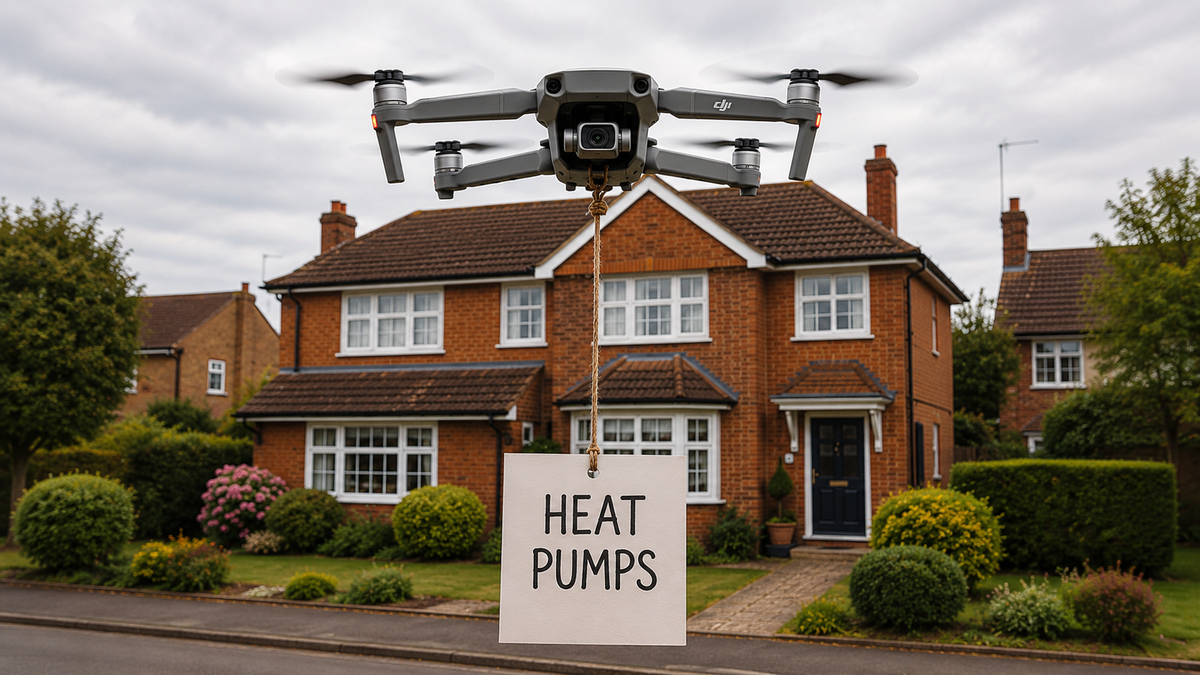
Somebody, somewhere, asks this question almost every day.
"How do we sell more heat pumps?"
It sounds sensible.
It isn't.
Because it assumes people wake up in the morning wanting a heat pump.
They don't.
Nobody has ever leapt out of bed shouting:
"Today's the day. I shall purchase a heat pump."
People wake up wanting toast. Or.
They want a house that isn't cold in January.
They want one that isn't an oven in June.
They want bills that do not make them cry.
They want to stop worrying.
Heat pumps are just one possible way of less people crying.
The renewable industry spends a great deal of time talking to itself.
It talks about installer shortages.
Factories.
Training.
Accreditation.
Service engineers.
Manufacturing.
Many people nod and agree if you say these are important in a seminar.
If a consumer has already decided they want renewable technology.
They will nod and agree that these things are important.
But they do not answer the bigger question.
What if all the people who agree these ⬆️ are important things - are a very small group of people.
How do you persuade the millions of people who don't know or care, because they are thinking about childcare, keeping their jobs or going to bingo?
Marketing people have a name for this.
It is called Category Demand.
Which is a complicated way of saying:
"How do you get people to care that something exists?"
You are not trying to convince somebody to choose your heat pump instead of somebody else's.
You are trying to convince them that changing how they heat their home is important.
Those are completely different things.
Sometimes petrol people like Nigel Clarkson get worried about the climate.
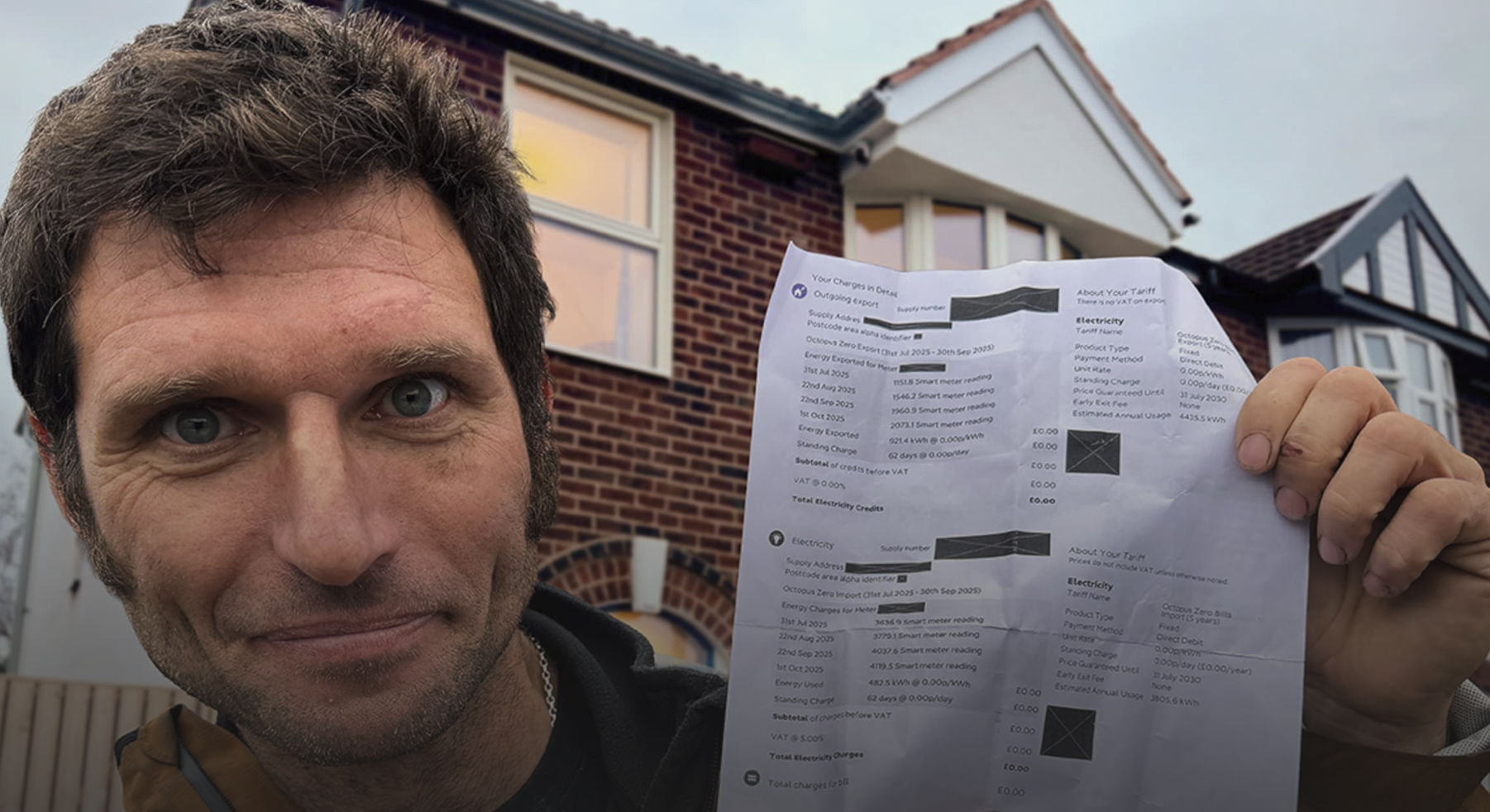
Handsome people, who everyone listens to - like Guy Martin make people think.
They think...
"Maybe."
Now the question changes.
It is no longer:
"Should I care?"
It becomes:
"Will this actually work in a house like mine?"
That is where case studies become incredibly useful.
Not because they create demand.
They don't.
They reduce uncertainty.
Uncertainty turns into trust.
Trust turns into confidence.
Confidence becomes a buying decision.
The renewable industry sometimes forgets this.
For years it sold products to engineers.
Engineers enjoy engineering.
These terms make them smile and get excited: flow temperatures, seasonal performance factors, pipe diameters, control strategies.
This is absolutely normal.
Engineers are lovely people.
But homeowners are not engineers.
Most of them would quite like never having to think about heating ever again.
Imagine asking somebody for a hug.
Instead they hand you an algebra textbook.
That is roughly what technical marketing feels like.
People want a hug.
They get maths.
Something interesting happened. In a war.
Ukraine started changing warfare.
Drones are not fashionable.
But they are cheap.
Faster.
Easier to adapt.
If one tactic stopped working...
They invented another one.
Very quickly.
The lesson isn't really about drones.
It is about adaptation.
If your resources are limited...
You stop asking,
"How do we spend more money?"
You start asking,
"How do we become smarter?"
Renewable marketing faces exactly the same choice.
Perhaps the question should not be:
"How do we buy more attention?"
Perhaps it should be:
"How do we manufacture more trust?"
That is a much cheaper business.
Instead of making bigger promises... Collect better evidence.
Instead of polished brochures... Film real customers.
Instead of demonstrating products... Show outcomes.
Eventually something surprising happens.
The homeowner watches another homeowner.
The houses look similar. The worries sound familiar. The ending is reassuring.
The sales conversation has already begun.
Nobody needed persuading that a compressor was efficient.
They simply saw somebody like themselves living comfortably.
Sometimes that is enough.
The companies that will win over the next decade probably won't have the biggest advertising budgets.
They will have the biggest library of believable stories.
Because evidence scales.
Trust compounds.
And confidence is much easier to sell than technology.
This is Sean.
He installs heat pump and solar and batteries. He has not stopped working all year. He is very tired. But happy.
Sean doesn't like spending money on adverts. So he doesn't. Sean doesn't trust lead generation to work.
Sean makes videos about work he does, that show how his installs work. His customers tell their stories. Like this one.
This makes people trust Sean even more.
Sean is booked out until March 2027 fitting heat pumps. He is recruiting more people. There is not a slowdown in heat pump demand in Sean's world.
This is Simon. He installs heat pumps too.
Simon is very famous amongst heat pump engineers. He can make engineers nod very vigorously. A lot.
Simon wants to get more people to have a heat pump. So he is getting his customers to tell people his work is good.
Simon will fit a lot more heat pumps this year. Because people can trust Simon, like Dennis. Here:
All the videos Sean and Simon had are made by our sister company retrofit.video.