
From Medicine to Retrofit Champion: Nikki Lambert Is Helping Change the Face of Construction
After more than two decades in medicine, Nikki Lambert swapped hospital life for building sites, building physics and a new career helping homeowners create warmer, healthier homes.
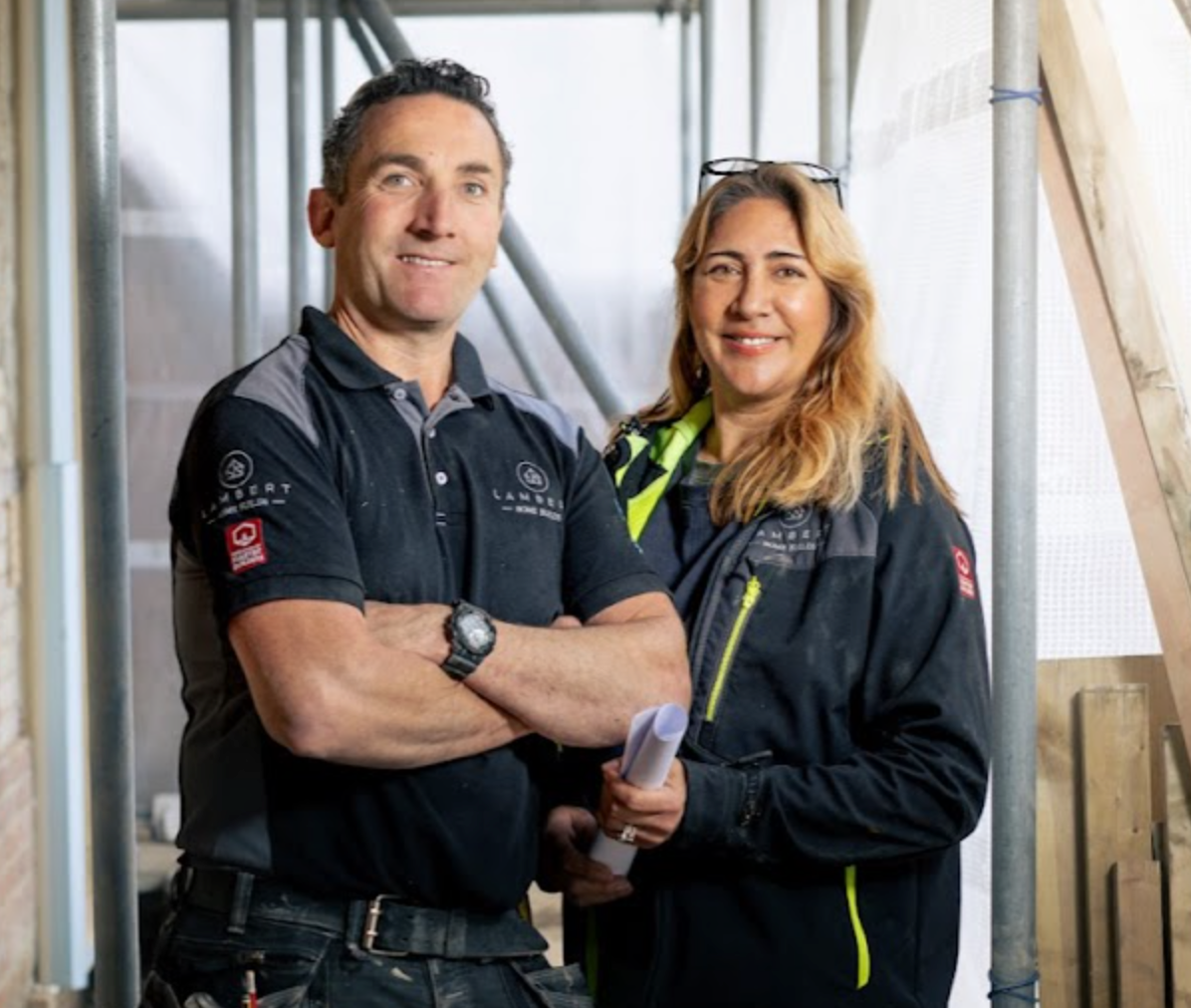
Following her recognition as a retrofit champion in Oxfordshire, Nikki Lambert talks exclusively to Refurb & Retrofit about finding her place in a male-dominated industry, the importance of community and why her own home became the ultimate testing ground.
There is something rather refreshing about Nikki Lambert's approach to retrofit. She doesn't appear particularly interested in making grand statements about changing the world. She would rather get on with changing a house, helping a homeowner or learning something new.
And perhaps that is precisely why her recent recognition as a retrofit champion is such a win.
Nikki is not someone who followed a conventional route into construction. For more than 20 years, she worked in medicine, before leaving that profession to join her husband Ross in his established building business.
Today, she combines practical experience, technical training and an understanding of how people live in their homes with an increasingly important role in community energy projects.
Her journey also illustrates something that the retrofit sector sometimes overlooks: the people who will help transform Britain's housing stock won't necessarily come from traditional construction backgrounds.
Some will arrive from medicine, education, science, community work and entirely different professions, bringing skills that the industry desperately needs.
For Nikki, that change began with a difficult decision about family life.
Career Change
After more than two decades in medicine, Nikki was juggling the demands of her profession, night shifts and raising four children.
Her husband Ross had been running a building company for years. Although Nikki had always helped with aspects of the business, her involvement had largely fitted around her medical career and family commitments.
Eventually, something had to give.
Around ten years ago, she left medicine and joined Ross full-time.
It wasn't an entirely unfamiliar world. She had helped on building projects before, sometimes carrying materials, sometimes handling paperwork and administration. But working in the business every day was a different proposition.
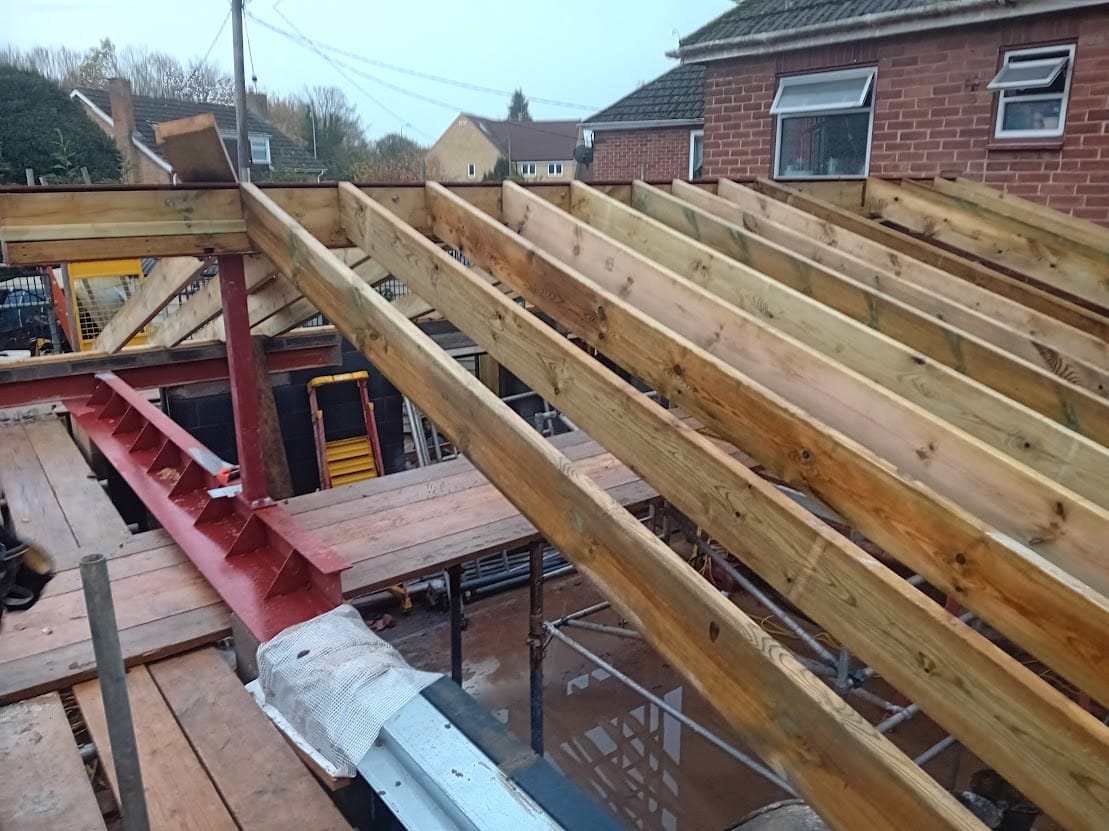
There was plenty to learn, and, as she would discover, an entirely new professional identity to establish.
Then the pandemic arrived.
While much of the country was shutting down, an unusual request from a local publican created an unexpected opportunity.
Could Ross build an outdoor dining pod that would allow customers to eat outside?
He could. And what began as a local solution rapidly became something much bigger.
Nikki recalls that the business eventually produced nearly 800 pods, with villagers, employees and their own children helping along the way.
The couple travelled around the country delivering them, including journeys as far as Cornwall.
It was a remarkable period of activity for a small building business, but the demand couldn't last forever.
As restrictions ended, the couple returned to more conventional construction projects: extensions, renovations and improving existing homes.
By then, however, another project was beginning to change the direction of their lives.
Their own house.
Homes Become The Inspiration
Before purchasing their current home in 2022, the family had been renting a converted stone piggery in a village outside Oxford.
Beautiful to look at, Nikki remembers, but desperately uncomfortable during winter.
It had an oil boiler, old glazing and a small log burner. Keeping warm was a struggle.
The experience left an impression.
When the family bought their next house, it was another property requiring substantial work. That was hardly surprising, given Ross's profession.
Nikki laughs about the reality of being married to a builder: there always seems to be another project underway.
But this renovation would be different.
With energy prices rising and growing awareness of the need to improve domestic energy efficiency, Nikki became determined that their new home would not simply receive another conventional refurbishment.
She wanted to understand how it could perform better.
One early decision was particularly bold: disconnecting the gas supply.
The consequences were immediate.
Without an alternative heating system ready to operate, the family spent a year without central heating while navigating renovation works, planning permission and the practical realities of living in an unfinished house.
At one stage there wasn't even a functioning kitchen.
Nikki found herself cooking outdoors on a barbecue, including, memorably, a lemon meringue pie.
It was resourceful, certainly. Comfortable? Not particularly.
But the experience reinforced her determination to find a better way of living.
Today, the house is substantially improved, incorporating insulation, airtightness measures, an air-source heat pump and solar and battery technology.
The full story of that transformation deserves its own exploration, which Refurb & Retrofit will be filming in November.
For this interview, however, it is what happened alongside the renovation that matters.
Because Nikki had begun to discover a new professional calling.
Finding A Purpose In Building Physics
The turning point came through an encounter on a building site in North Oxford.
The couple were working on a small extension when Michael Hooth, who was involved with RetrofitWorks and contractor engagement for Cosy Homes Oxfordshire, approached Ross.
He had been watching how they worked and wanted to know whether they would consider becoming contractors within the retrofit programme.
Initially, the couple weren't entirely sure what he wanted.
But after meeting Michael and learning more about the approach, Nikki recognised something important.
Retrofit provided a framework for work she was already becoming fascinated by.
It connected the practical challenges of improving a house with the science of how buildings function.
For someone whose previous profession involved understanding the human body, the connection was surprisingly natural.
"When I was younger, I wanted to be a doctor because I wanted to know how things worked. I wanted to know, right, we've got a kidney, but how do I know what my kidney is doing? I mean, it's there and it's obviously functioning. So, in a way, I sort of had this kind of, well, we've got this building, I want to know how it works."
It is a lovely way of explaining her enthusiasm for building physics.
Nikki had worked in anaesthetics, a field in which understanding systems, measurements and how different processes interact is fundamental.
Now she was applying that curiosity to buildings.
How does heat move? Why do some houses remain uncomfortable despite having powerful heating systems? How do insulation, ventilation and airtightness interact?
And how can a homeowner know whether the improvements they are paying for will actually deliver what they need?
Nikki began taking courses and acquiring qualifications, determined to develop the technical understanding that would allow her to contribute with confidence.
But her motivation wasn't simply academic.
She had also identified a problem that will be familiar to many readers.
The trust problem facing retrofit
One of the biggest barriers to improving Britain's homes isn't necessarily a lack of technology.
It is the difficulty ordinary homeowners face when trying to work out what to do.
Should they install a heat pump first? Insulate the loft? Replace the windows? Fit solar panels? And who can they trust to provide advice without trying to sell them something?
Nikki sees that confusion regularly among clients.
People research different options, receive contradictory recommendations and struggle to identify a sensible starting point.
For a homeowner contemplating thousands of pounds of expenditure, uncertainty can quickly become paralysis.
And underneath it all sits a difficult question about trust.
"And the problem is that there's no trust in the industry either. Like, there's such a big issue with trust and consumers, and you know, that just that the builders are just trying to, like, you know, just scam them. So there's a real trust issue, and there's no kind of, so it's really hard to get kind of like credibility."
Nikki's response has been to concentrate on knowledge, professional development and demonstrating competence through the work itself.
Rather than expecting homeowners to take claims on trust, she wants to be able to explain what is being proposed and why.
It is an approach that has helped shape the couple's business and their relationship with clients.
And it leads to another important aspect of Nikki's story. Her experience as a woman in construction.
Women in Retrofit
Construction remains a heavily male-dominated profession, particularly in its technical and site-based occupations.
For women entering the industry from other careers, that can create additional challenges, from assumptions about competence to the simple experience of being the only woman in a room.
Nikki is realistic about those barriers, but she also sees advantages in the perspective she brings.
Her medical background, communication skills and experience dealing with people have proved particularly useful when working with homeowners and community organisations.
"I'd say working with the community groups is probably almost an advantage to be a woman, you know, particularly because it's a bit more unusual in the construction industry. So they're more interested in your story."
Her experience raises an interesting question for the wider retrofit sector.
If the challenge is to persuade millions of households to make complex improvements to their homes, shouldn't the industry be drawing on a much wider range of skills?
Technical competence is essential, but so is listening.
A homeowner might be worried about costs, disruption, health, comfort or whether the finished installation will actually work.
Those concerns cannot always be resolved with a product specification or a heat-loss calculation.
Nikki believes women can bring valuable additional perspectives to those conversations.
She also recognises that some female homeowners may feel more comfortable discussing their concerns with another woman.
"So they just has a different, you know, we're, and definitely, there's a lot of theme, you know, the homeowners, it's often the women that we're dealing with. So they would rather deal with a woman than, you know, a man that just pats them on the head."
For Nikki and Ross, the solution is straightforward: they visit clients together.
It means homeowners meet both sides of the business from the beginning, and Nikki is directly involved in discussing projects rather than remaining behind the scenes.
It also helps challenge assumptions about who holds technical knowledge within a construction company.
Nikki is clear that she has experienced moments of self-doubt.
"But I think, but it is difficult in the industry where it is very male-dominated. And you do get a sense of a bit of imposter syndrome."
Her response has been to learn more, acquire qualifications and become increasingly confident discussing technical details on site.
She wants people to recognise her contribution through her work.
Interestingly, she also believes the younger members of their own team may have a different perspective.
Some of their apprentices have never worked for another company. To them, having Nikki involved in site work and technical discussions is simply normal.
That matters.
Changing an industry's culture isn't always about grand declarations. Sometimes it begins with the everyday expectations established inside a small business.
From 'Nurse' to Technical Professional
Nikki's experiences of gender assumptions didn't begin in construction.
During her medical career, she recalls frequently being mistaken for a nurse.
It is a revealing parallel between two professions where assumptions about who holds authority can still shape people's expectations.
But she is not particularly interested in defining herself through confrontation.
"Well, yeah, I mean, I got, I used to get called nurse a lot. So, really? So, but I don't really, I really don't. I think actions speak louder than words."
That attitude runs throughout her story.
She has chosen to develop her knowledge, establish credibility and demonstrate that she belongs in technical conversations.
Her training is important to her personally, but she also sees it as a way of improving the experience of the people she works with.
And perhaps that is one of the strongest arguments for encouraging more women into retrofit.
The industry doesn't simply need to recruit more people to fill existing roles.
It has an opportunity to rethink what those roles involve, how clients are treated and what different professional backgrounds can contribute.
Nikki's journey shows how valuable that diversity of experience can be.
A Retrofit Champion
Nikki's recent recognition as a retrofit champion reflects more than the improvements made to her family's house.
She explains that a friend nominated her for the award, which considered both the work undertaken at home and how that experience had developed into wider community engagement.
Alongside their renovation, Nikki and Ross participated in an Oxfordshire solar and battery trial designed to explore alternatives to the large upfront costs that can prevent households from adopting renewable technologies.
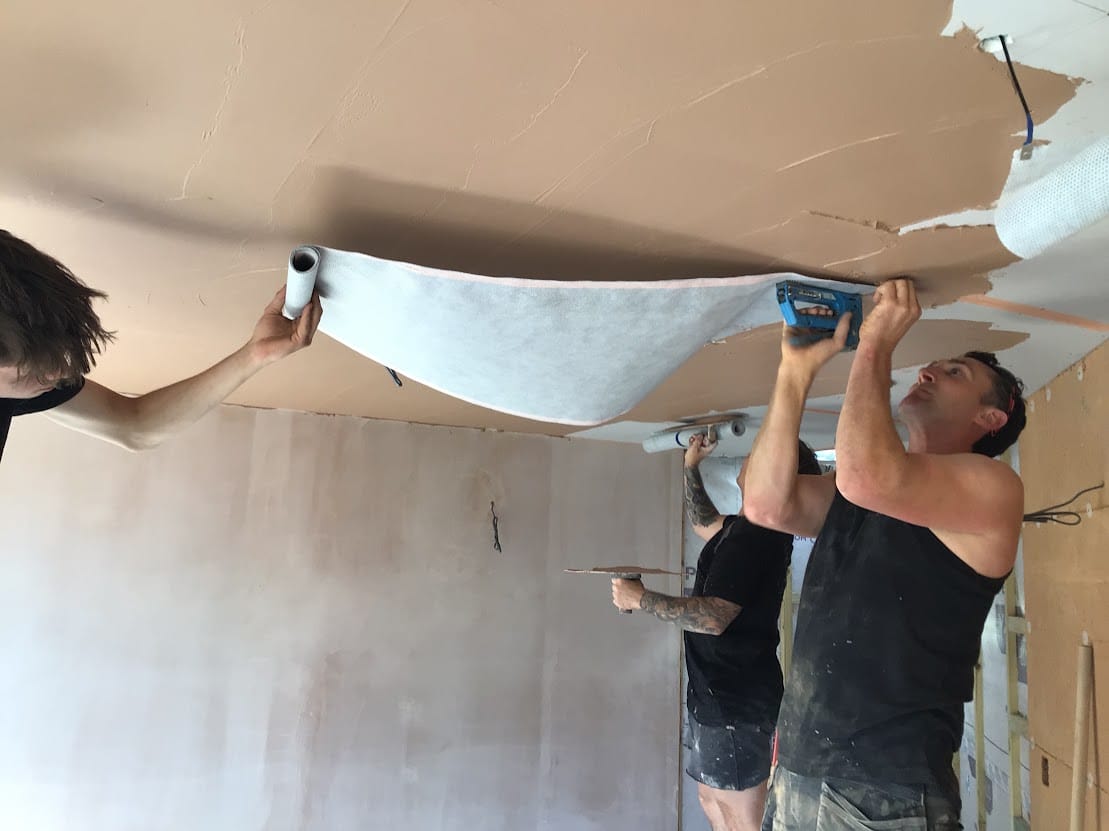
Their participation helped make their own home part of a wider experiment in household energy use.
But Nikki's interests have increasingly extended beyond the technologies themselves.
She has also trained as an energy champion, offering support to community groups and local energy events.
Her experiences have highlighted the enormous differences between households, even within the same county.
Some communities are exploring shared energy infrastructure and local renewable generation.
Others are dealing with fuel poverty and the immediate challenge of keeping homes warm.
A useful retrofit conversation has to begin by understanding those differences.
"And in other parts, you've got, you know, they're talking about, you know, community solar batteries. And, you know, so it's such a big gap. So it's really interesting to be part of that side of things as well."
This is where Nikki's combination of professional experience becomes especially valuable.
She understands the technical side of building improvements, but she also understands that people do not experience their homes as engineering projects.
They experience them as places to raise families, recover from illness, work, rest and live.
A successful retrofit needs to respond to those realities.
For community energy initiatives, having people who can connect technical knowledge with everyday concerns is an enormous asset.
And Nikki is clearly enjoying the opportunity.
Recognition Is Important
Awards can sometimes feel a little detached from the practical work taking place in homes and communities.
But Nikki's recognition is an opportunity to celebrate a different kind of success story.
Here is someone who entered construction after an established career in another profession, embraced the challenge of learning building physics, improved her own home and now uses that experience to help others.
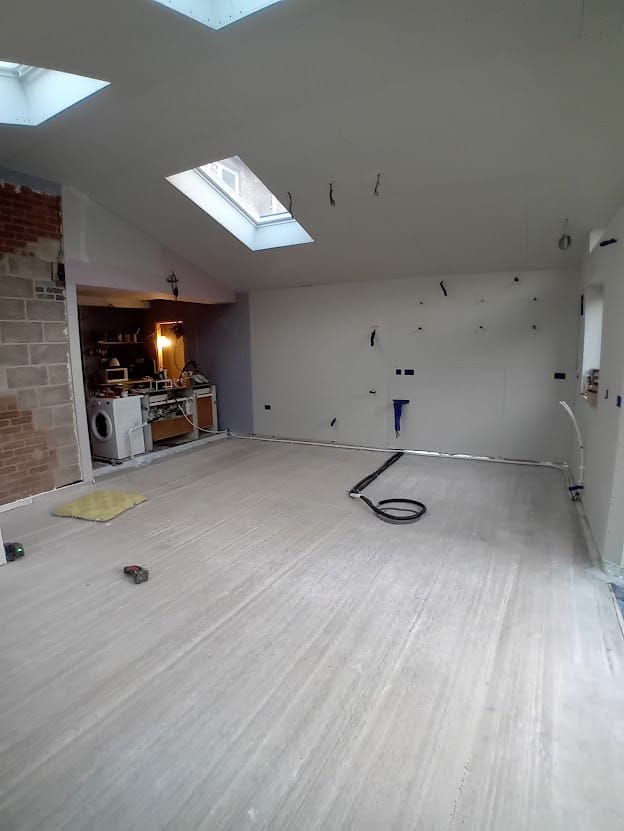
She has also demonstrated that women entering retrofit need not be confined to administrative, communications or supporting roles.
They can be technically knowledgeable, commercially involved, client-facing and influential in how projects are delivered.
For an industry facing an enormous challenge in improving existing homes, that is worth recognising.
And there is something particularly appealing about Nikki's lack of pretension. She is enthusiastic about what she has learned, realistic about the difficulties and happy to admit that the family home has become something of an experiment.
She and Ross have tried different approaches because they want to understand how they work. Not everything about the journey has been easy.
There have been cold winters, an unfinished kitchen, demanding family logistics and plenty of learning along the way.
But the outcome has been transformative.
The family now lives in a home that Nikki describes as consistently comfortable, without the cold mornings and draughts she had come to accept in previous properties.
That personal experience gives her a powerful story to share with homeowners contemplating similar improvements.
Coming Next: Inside Nikki's Own Retrofit
In November, Refurb & Retrofit will visit Nikki and Ross at home for a new instalment of our Dogfooding film series.
The series explores what happens when people who work in the retrofit industry apply their professional knowledge to their own properties.
Rather than simply recommending technologies to other people, they put those ideas into practice and live with the results.
For Nikki, the principle is already central to how she approaches her work.
"I mean, we, yeah, I mean, we like, I well, I wouldn't. Recommend anything unless we've tried it, which obviously means our house is a bit of a kind of, you well, guinea pig or hybrid of all sorts of different things."
We'll explore the measures installed, what the family has learned and how their home performs in everyday life.
But that is a story for another day.
For now, the spotlight belongs firmly on Nikki Lambert.
A former medic who discovered a passion for building physics, a mother of four who helped turn a family building business towards retrofit, and a woman whose growing technical confidence is helping challenge assumptions about who belongs in construction.
Her recognition as a retrofit champion is a celebration of that journey.
And, perhaps more importantly, a reminder that the future of retrofit will be shaped not just by new technologies, but by people prepared to learn, listen and do things differently.
Congratulations, Nikki.
Refurb & Retrofit's forthcoming Dogfooding film will follow Nikki and Ross through their own home, exploring the retrofit measures they have installed and what other homeowners can learn from their experience.