
Can Heat Pumps Work In Cold Weather? : A video case study
Do not use heat pumps in these types of homes, they say. But they're wrong. VIDEO proof.
(They Can With The Heat Pump Whisperer of the Central Belt)
There is a familiar pause in the British retrofit conversation. It comes just as things start to get difficult.
The house is too old. The walls are too thick. The pipes are too small. The insulation is only partial. The property is rural, off grid, shaped by centuries rather than standards.
At that moment, the argument often retreats. Keep the oil boiler. Switch to a cleaner fuel. Wait for better technology. Accept that some homes are simply too hard.
Sean Hogan isn't the retreating type.
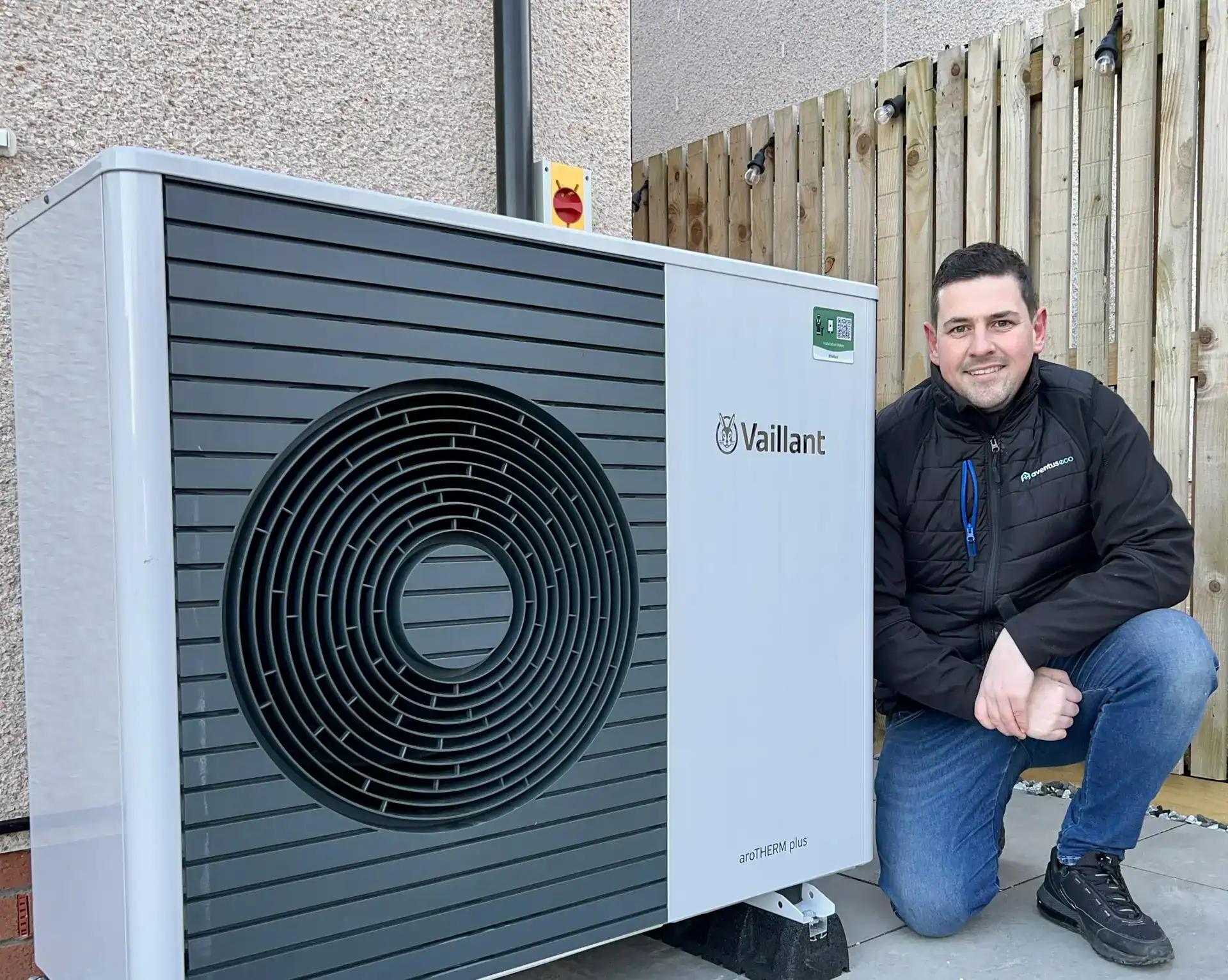
Sean is the founder of Aventus Eco, and over the past few years he has built something unusual across the central belt of Scotland. Not a showroom operation or a volume installation business, but a growing belt of warm, electrically heated homes that were never meant to be straightforward.
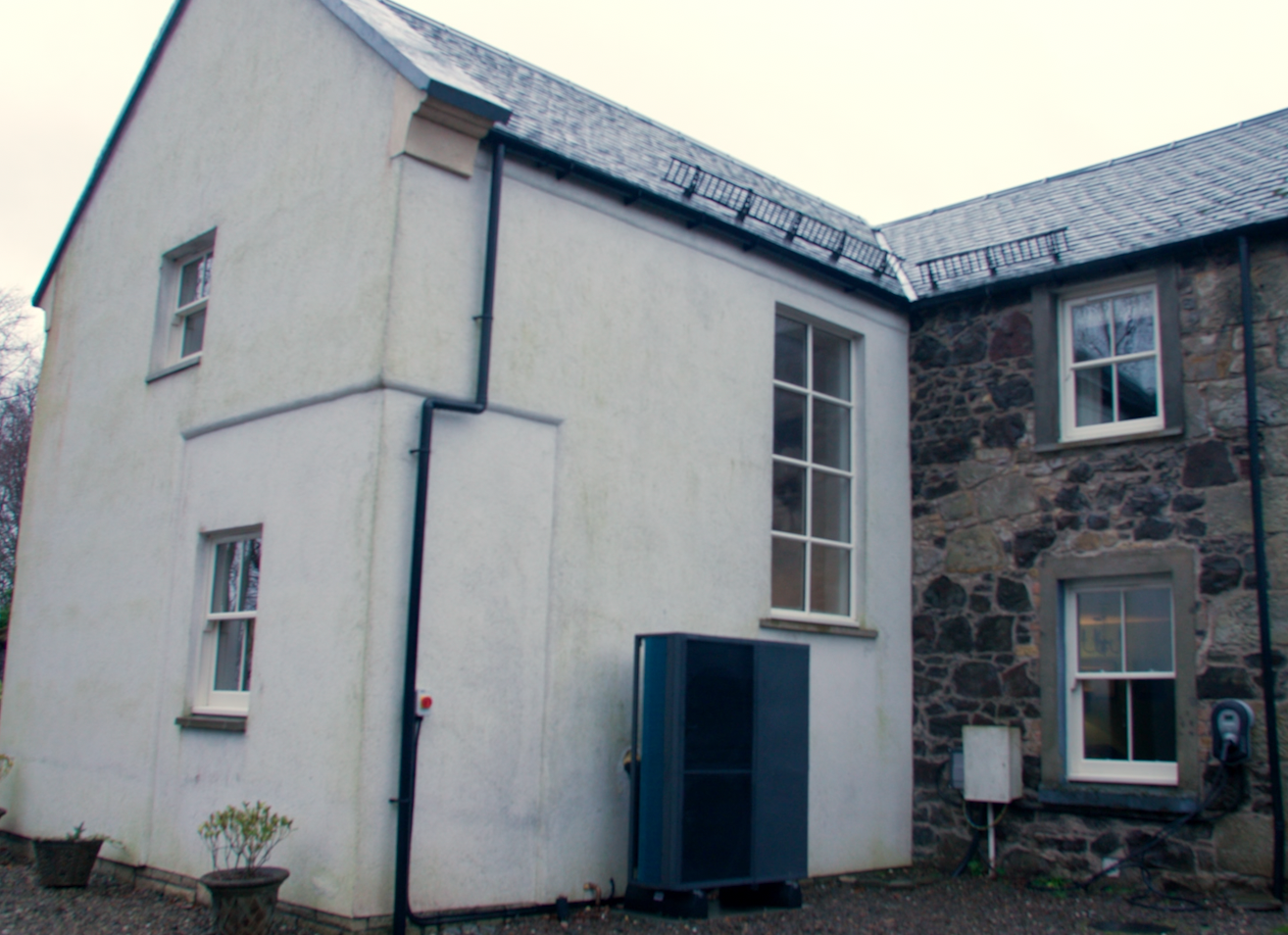
Stone farmhouses. Mixed age extensions. Microbore pipework buried in concrete. Partial insulation. No gas. No easy wins.
Homes that are routinely written off.

A house that was not meant to work
The property at the centre of this first film is a perfect test case. Six hundred millimetre whinstone walls. A patchwork of underfloor heating and radiators. Eight millimetre microbore pipework set in concrete. A building shaped by history rather than efficiency.
Sean knew immediately what he was dealing with.
“It was like a proper challenge. And even when I first came I was like, oh, this is a tricky one.”
The homeowner had an oil boiler and the anxiety that comes with removing something familiar. Sean’s response was not cautious reassurance, but responsibility.
“Get rid of it because I know an air source heat pump will work. I can make it work.”
That confidence rests on something rare in the retrofit world. Accountability.
“If a heat pump doesn’t work, it’s not the heat pump’s fault. It’s my fault. And it’s my fault, I’ll rectify it.”
One house, one system
Where many retrofit projects accrete complexity, more pumps, more zones, more controls, Sean moves in the opposite direction. He reduces.
“I want to treat the house, the house is a box to me. I don’t want to heat different areas. I want it just heat everywhere evenly.”
In this case, that meant removing pumps rather than adding them. Manifolds were re-piped. Multiple circuits collapsed into one open loop. One pump doing the work of many.
At the heart of the system sits a Panasonic M Series T-CAP, chosen not for branding or incentives, but because it could physically do the job.
“That Panasonic M Series T-CAP out there sufficiently and easily pumps all the water around the house and keeps it warm.”
Microbore pipework, underfloor loops, radiators, thick stone walls. None of these are barriers if the head, flow and calculations are correct.
Design, not ideology
One of the most persistent myths in the heat pump debate is that they only work in ideal homes. New builds. Deep retrofits. Perfect insulation.
This house is none of those things.
And yet, in the depths of a Scottish winter, it performs.
“That house is running regularly over 400%. And this is us pretty much in the depths of winter.”
Outside temperatures dropped below minus five. Inside, the house sits calmly at twenty or twenty one degrees. Even. Stable. Comfortable.
This directly challenges a narrative often repeated by high profile sceptics that heat pumps cannot heat difficult buildings. They can. What they cannot survive is poor design.
Sean is clear about the difference.
“For an installer that doesn’t understand the house or the physics or how it works you’re never going to get an efficient system.”
A different kind of installer
For years, Sean worked largely on his own. Now he leads a growing team, but the approach remains personal.
Every customer is placed into a private WhatsApp group that lasts for the lifetime of the system. Seasonal adjustments. Questions about controls. Small changes that make the difference between performance on paper and comfort in reality.
Once a month, Sean spends a day fixing heat pump systems installed by others. He does it without charge. Not as marketing, but because he does not want the technology blamed for human error.
He is a family man. A system thinker. A practitioner who is still training, still learning, still refining his understanding of buildings and physics.
He does not sell a product. He designs outcomes.
Sean Hogan IS The Future
The transition away from oil boilers will not be decided by policy documents or fuel branding exercises. It will be decided by people who understand buildings, who take responsibility for performance, and who stay present after the install is complete.
This is the first of three films documenting Sean Hogan’s work. Together, they form a case study not just of technology, but of competence.
If the future of heat pumps feels uncertain, it is not because the machines cannot do the job.
It is because there are not yet enough people willing to do it properly.
What do your customers say about you?
Get your own customer case ⬇️⬇️⬇️ study like Sean did and find out...
This customer case study ⬇️⬇️⬇️⬇️ supplied by Aventus Eco and recorded by retrofit.video. Want a case study of your own? Book a call.